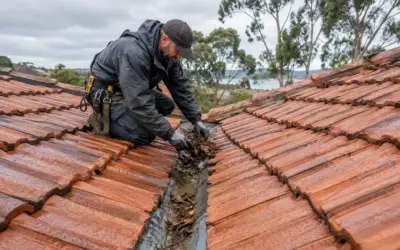
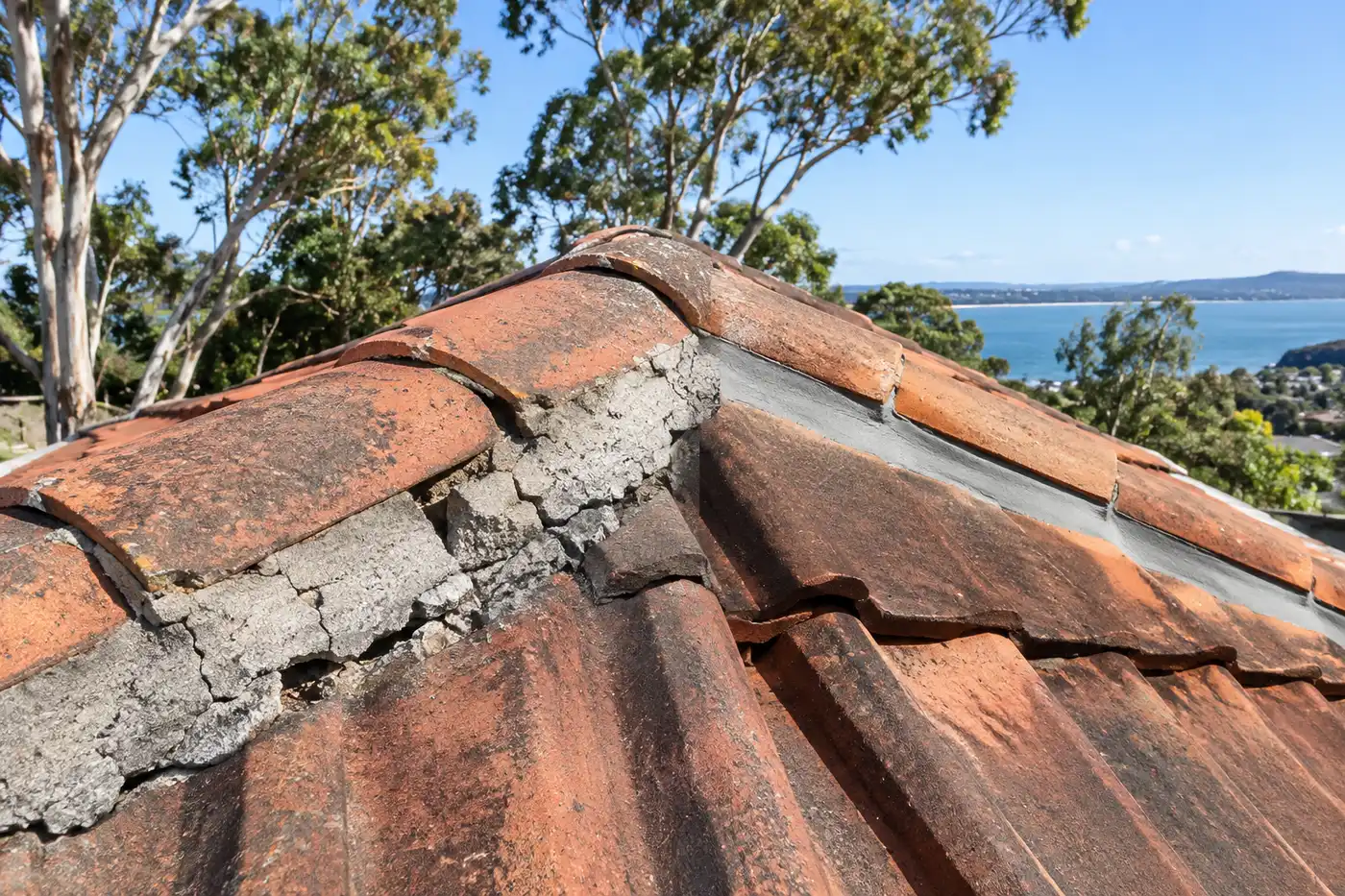
It usually starts with something small. You are cleaning the gutters and find a handful of grey, gritty chunks that look like broken concrete. Or a water mark shows up on the ceiling in a straight line, right under where the hip of the roof runs. On a tiled roof in Nowra, both of those point to the same place: the mortar holding your ridge caps down. That is where roof repointing comes in, and it is one of the most common jobs we do on older tile roofs around the Shoalhaven.
This post covers what repointing is, the signs that tell you it is due, and when a roof needs more than a fresh coat of pointing.
Two layers hold your ridge caps in place
Ridge caps are the curved tiles that run along the top of the roof and down each hip (the sloping edges where two roof faces meet). They are not nailed down like the flat tiles. They sit on a bed of mortar, a sand and cement mix that fills the gap between the caps and the tiles below. That is called the bedding.
Over the top of the bedding goes the pointing. On older homes this was often just a finer cement mix, trowelled smooth. Cement is rigid, and a roof is not. It heats up, cools down and moves in the wind, so over the years that rigid layer cracks and starts to let go. Modern pointing is a flexible compound that moves with the roof instead of fighting it.
Repointing means removing the loose, cracked pointing and applying a new flexible layer over sound bedding. It seals the joint, stops water getting in behind the caps and helps hold them firm.
Six things we look for on a roof that needs repointing
Some of these you can spot from the ground or the gutter. Others need someone up on the roof.
- Hairline or open cracks running along the pointing
- Chunks of mortar in the gutters, valleys or on the tiles below the ridge
- Gaps you can see between the ridge caps and the tiles
- Caps that rock or shift when pressed
- Water stains on the ceiling along the line of a hip or ridge
- Birds, wasps or possums getting in near the top of the roof
That last one surprises people. A gap under a ridge cap is a handy front door for a nesting bird, and if you are hearing scratching near the peak of the roof, the ridge line is a good place to start looking.
Leaks are the sign most people notice first, but they tend to be late in the story. By the time water is getting through, the pointing has usually been failing for a while. If you are chasing a leak that only shows up in a downpour, our post on why roofs leak in heavy rain covers the other usual suspects too, because the ridge is not always the culprit.
Repointing is not the same as rebedding
This is the question that decides the size of the job. If the bedding underneath is still solid and the caps are firm, repointing on its own is the fix. We clean off the old pointing, prepare the surface and apply new flexible pointing along the full run.
If the bedding has crumbled, or the caps are loose, new pointing over the top will not hold for long. You are sealing over a problem. In that case the caps need to come off, the old bedding gets cleared away, fresh bedding goes down, the caps are reset and then the new pointing goes on. That is rebedding and repointing, and it takes longer.
We will not know which one your roof needs until we have been up there and checked the caps by hand. What we do promise is that you will hear which one it is in plain English, with the reasons, before anything is priced.
Why Nowra roofs wear their pointing faster in some spots
Ridge lines take the worst of the weather. They are the highest, most exposed part of the house, and they cop the full force of the southerly changes and the heavy rain that sweeps in off the coast. Homes closer to the water, in places like Culburra Beach and Shoalhaven Heads, also deal with salt air settling on the roof. On older homes with the original cement pointing, we often find the side facing the prevailing weather has cracked well before the sheltered side.
Metal roofs are a different story. Colorbond and other metal roofs use a metal ridge capping that is screwed down, with no mortar involved, so there is nothing to repoint. Loose screws or worn seals on metal ridge capping are a repair job of their own.
When repointing is part of a bigger job
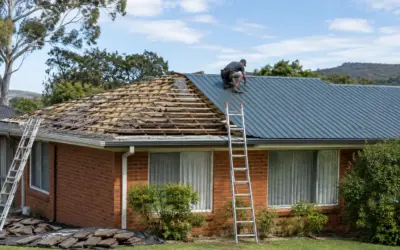
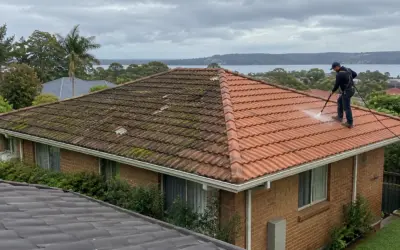
On plenty of the tile roofs we look at, the ridge caps are not the only thing showing their age. There may be cracked tiles, heavy lichen, a faded surface or rusty valleys. When that is the case, repointing often makes the most sense as one step in a full restoration, done before cleaning and painting so the whole roof is sealed and finished at once.
If you are weighing up whether an older tile roof is worth keeping at all, our guide to deciding between restoring and replacing a roof walks through how we make that call.
For roofs where the ridges are the main problem and the rest is sound, a standalone repointing job is often all that is needed. You can read more about how we handle ridge capping repairs and repointing on our service page, including rebedding for caps that have come loose.
Get the ridge line checked before the next big storm
Repointing is a job that rewards timing. Caught early, it is a straightforward fix. Left until caps are loose and water is coming through, it turns into rebedding plus ceiling repairs. If you have noticed any of the signs above, call us on (02) 4409 2597 or book through our roof repointing service. Ryan Bruce leads the team, with more than 10 years of roofing experience behind the work. We are fully licensed and insured, and we will look at the roof properly and give you a free written quote.
Common questions about roof repointing
What is repointing on a roof?
Repointing is replacing the top layer of mortar that seals your ridge and hip caps to the tiles below. The old, cracked pointing is removed and a new flexible compound is applied over the bedding. It keeps water out and helps hold the caps in place.
How do I know if my roof needs repointing?
Look for cracked pointing along the ridges, mortar chunks in the gutters, visible gaps under the caps, or ceiling stains that follow the line of a hip. Caps that move when pressed are a strong sign, but checking that means getting on the roof, which is best left to a roofer.
How much does it cost to repoint a house roof?
It depends on how many metres of ridge and hip the roof has, how steep and high it is, and whether the caps need rebedding as well as repointing. Rebedding takes more time and material, so it costs more. We inspect first and give you a free written quote that spells out what is included.
Can you repoint a roof yourself?
We would not recommend it. It means working at height on tiles that crack easily underfoot, and the job only lasts if loose bedding is spotted and fixed first. A patch of fresh pointing over failed bedding looks fine for a while and then lets go.
How long should roof pointing last?
Flexible pointing lasts much longer than the old rigid cement pointing, because it moves with the roof instead of cracking. How long depends on the product, how well the surface was prepared and how exposed the ridge is. Coastal homes facing the prevailing weather tend to see more wear.
What time of year is best for repointing?
A run of dry, mild weather is ideal, because the new pointing needs time to cure before it gets rained on. Around Nowra that usually means booking outside the wettest stretches. It is better to get it done before a stormy season than to wait for a leak to force the timing.