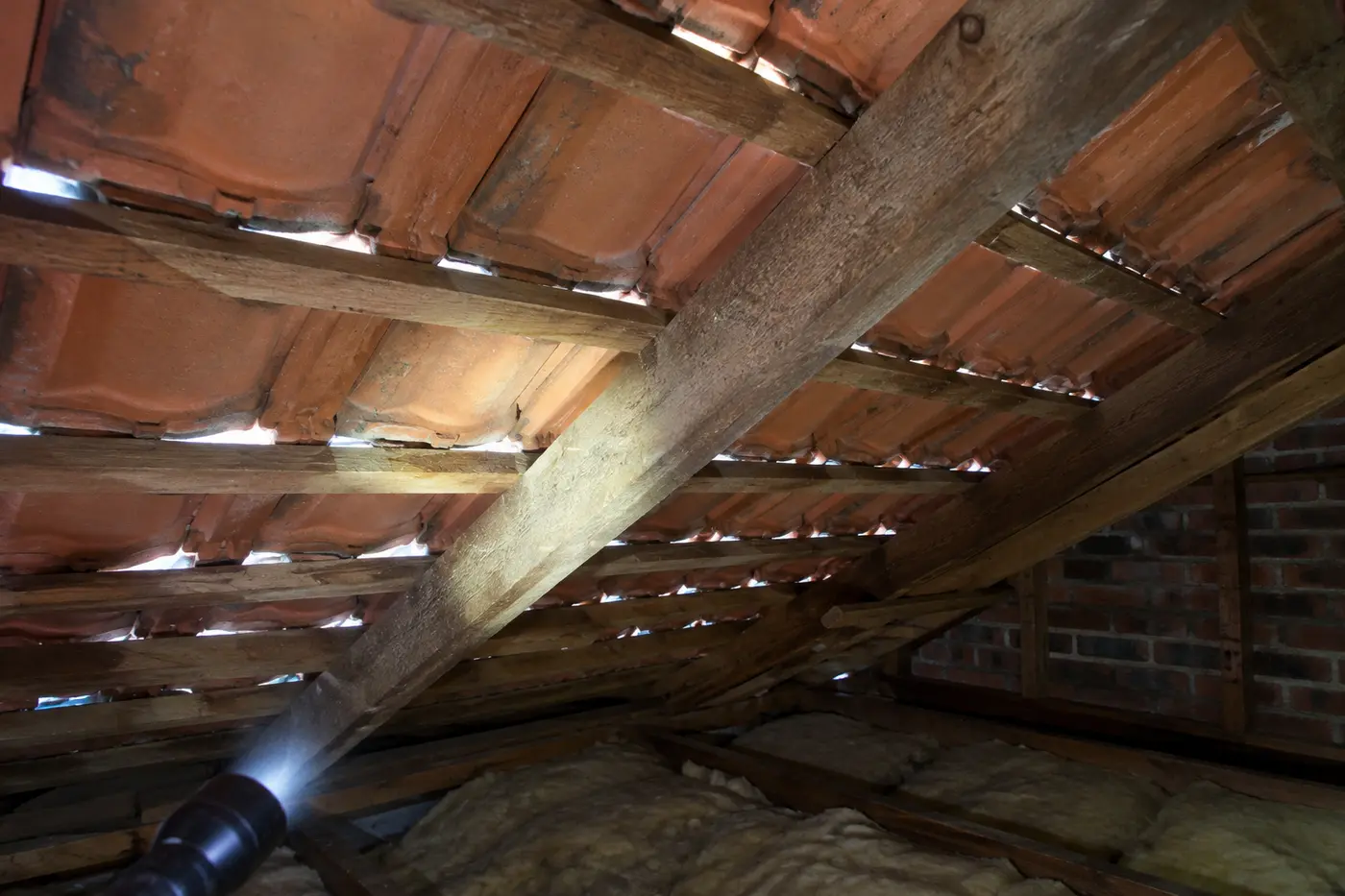
A homeowner in North Nowra rang us a while back after a trip into the roof space to run a new cable. Torch in hand, they looked up and saw the bare underside of their tiles, timber battens, and little slivers of daylight where the tiles overlap. No foil, no membrane, nothing. Their question was simple: is that normal, and should I be worried?
What they were looking for is roof sarking, and plenty of homes around Nowra were built without it. Whether that matters depends on your roof, how it was built and what you plan to do with it next. Here is how we explain it on site.
Sarking is the second skin under your roof
Sarking is a flexible sheet laid across the rafters or trusses, underneath the tiles or metal sheets. Most modern sarking is a foil-faced or woven plastic membrane. Older builders often called it sisalation, after a brand name that stuck.
On a tile roof it sits under the battens, so there is a gap between the tiles and the membrane. On a metal roof it usually sits directly under the sheets. Either way, the job is the same. It is a backup layer that catches whatever gets past the roof covering and sends it down to the gutter instead of onto your ceiling.
Tiles shed water, but they were never fully waterproof
This one surprises people. A tile roof is not a sealed surface. Each tile overlaps the one below, and gravity does the rest. In normal rain that works well.
Driving rain is a different story. When a strong southerly or an East Coast Low pushes rain sideways across the Shoalhaven, water can be blown up under the tile laps and through the small gaps at the edges. With sarking underneath, that water runs down the membrane and out into the gutter. Without it, the water lands on the ceiling insulation and the plaster.
Sarking also does a few quieter jobs:
- Keeps dust, pollen and fine leaf litter out of the roof space
- Helps stop embers getting into the roof cavity during a bushfire
- Reflects radiant heat when foil-faced and installed with an air gap
- Catches condensation that forms under metal sheets on cold nights
Lots of older Nowra roofs simply don’t have it
Fitting sarking under tiles was not standard practice for a long time, so it is common to find older tile roofs with nothing under them. On its own, that is not a defect. A sound tile roof with good pointing, clear valleys and intact flashings can keep a house dry for decades without sarking.
Where it starts to matter is when something else goes wrong. A cracked tile, a blocked valley or a slipped ridge cap lets water in, and there is no second line of defence to catch it. That is why an unsarked roof tends to show leaks faster, and why we pay closer attention to the small stuff on these roofs.
Whether it’s required depends on the roof and when it was built
For new tile roofs, the Australian Standard for roof tiles (AS 2050) requires sarking in some situations, including higher wind classifications, lower roof pitches and long rafter runs. Homes in bushfire prone areas can also need it under the bushfire construction standard (AS 3959), depending on the site’s rating. For metal roofs the standards are less strict, but we recommend something under the sheets on every house because condensation is a real problem without it.
For an existing roof, there is generally no rule that says you have to go back and add it. If you are building, extending or re-roofing, your builder or certifier will confirm what applies to your block.
You can’t properly add it from inside the roof space
Here is the catch. Sarking that actually drains water has to go over the rafters and under the battens, running down to the gutter. To get it there on an existing tile roof, the tiles and battens have to come off.
You will sometimes see foil stapled up between the rafters from inside the roof space. That can help a little with heat, but it does not give water a clear path out to the gutter, so it does very little for leaks.
That makes the timing simple. A roof restoration (cleaning, repairs, repointing and coating with the tiles staying put) normally does not include sarking, because nothing gets stripped. A full re-roof is the moment to put it in. If you are weighing those two options up, our guide on whether to restore or replace an older roof covers the bigger picture.
Metal roofs need something under the sheets, usually a blanket
Under Colorbond and other metal roofs, the usual choice is an insulation blanket, often called anticon. It is a layer of insulation with a foil face and a wire mesh to support it, laid straight under the sheets. It does the sarking job and adds insulation at the same time.
Without it, warm moist air from the house meets the cold steel overnight and condenses. By morning it drips back down onto the ceiling. A “leak” that only shows up on a clear, dry morning is very often exactly this. If you have a mystery stain under a metal roof, it is worth reading about how to tell a ceiling stain from a real roof leak before you assume the worst.
When old metal roofs are re-sheeted, the original blanket is usually flattened, torn or stained beyond saving, and it gets replaced along with the sheets. Our roof replacement work in Nowra is where sarking and blankets come into the conversation most, because the roof is already open.
When it’s worth paying for, and when it isn’t
If you are re-roofing, adding sarking is almost always worth it. The old roof is already off, the labour to lay it is small by comparison, and you will never get a cheaper chance to put it in.
If your roof is sound and dry, we would not tell you to strip it just to fit sarking. That would be spending a lot to solve a problem you do not have. Better to keep the tiles, pointing and valleys in good order so water never gets that far.
A few signs suggest the lack of sarking is costing you:
- Fine dust or grit building up on top of the ceiling insulation
- Damp insulation or stains near outside walls after windy storms
- Drips under a metal roof on cold, clear mornings
- A roof space that gets noticeably hotter than the rest of the house
If you are seeing any of those, it is worth having someone look at the whole roof. Often the fix is a repair rather than a new roof, and we will say so when that is the case.
Common questions about roof sarking
Why is sarking used?
It is a backup layer under the roof covering. It catches wind-driven rain, dust and condensation and carries them to the gutter, and foil types also reflect radiant heat. It can also help keep embers out of the roof space in a bushfire.
Is sarking required for a Colorbond roof?
Not always under the standards, but we recommend something under every metal roof on a home. Without a blanket or sarking, condensation forms under the sheets and drips onto the ceiling. Most homes use an insulation blanket, which does both jobs at once.
How much does roof sarking cost?
It depends on the roof size, the product and whether the roof is already being stripped. As a standalone job on a tile roof it is expensive, because the tiles and battens have to come off. As part of a re-roof it is a much smaller line item, and it is shown on the free written quote so you can see exactly what is included.
Can sarking be added to an existing roof?
Only properly by lifting the tiles or sheets and laying it over the rafters. Foil fixed between the rafters from inside the roof space helps a little with heat but does not drain water to the gutter. In practice, most people add it when they re-roof.
Is sarking the same as insulation?
No. Plain sarking is mainly a weather and moisture barrier, with some heat reflection if it is foil-faced. Ceiling batts and roof blankets add actual insulation. Anticon blankets under metal roofs combine the two in one layer.
Does torn or sagging sarking need replacing?
Small tears are common in older roofs and are not always a problem, as long as water can still run down to the gutter. Large holes, or sarking that sags and pools water against the battens, should be looked at. It usually gets replaced when that section of roof is opened up for other work.
If you are planning a re-roof, or you just want to know what is under your tiles and whether it matters, we are happy to come and look. Ryan Bruce leads the team, we have more than 10 years of roofing experience behind the work, and we are fully licensed and insured. We will explain what we find in plain English and put the price in writing. Get in touch about replacing your roof with the right layers underneath and we will take it from there.