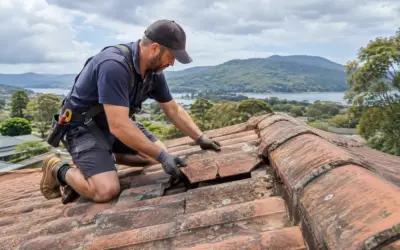
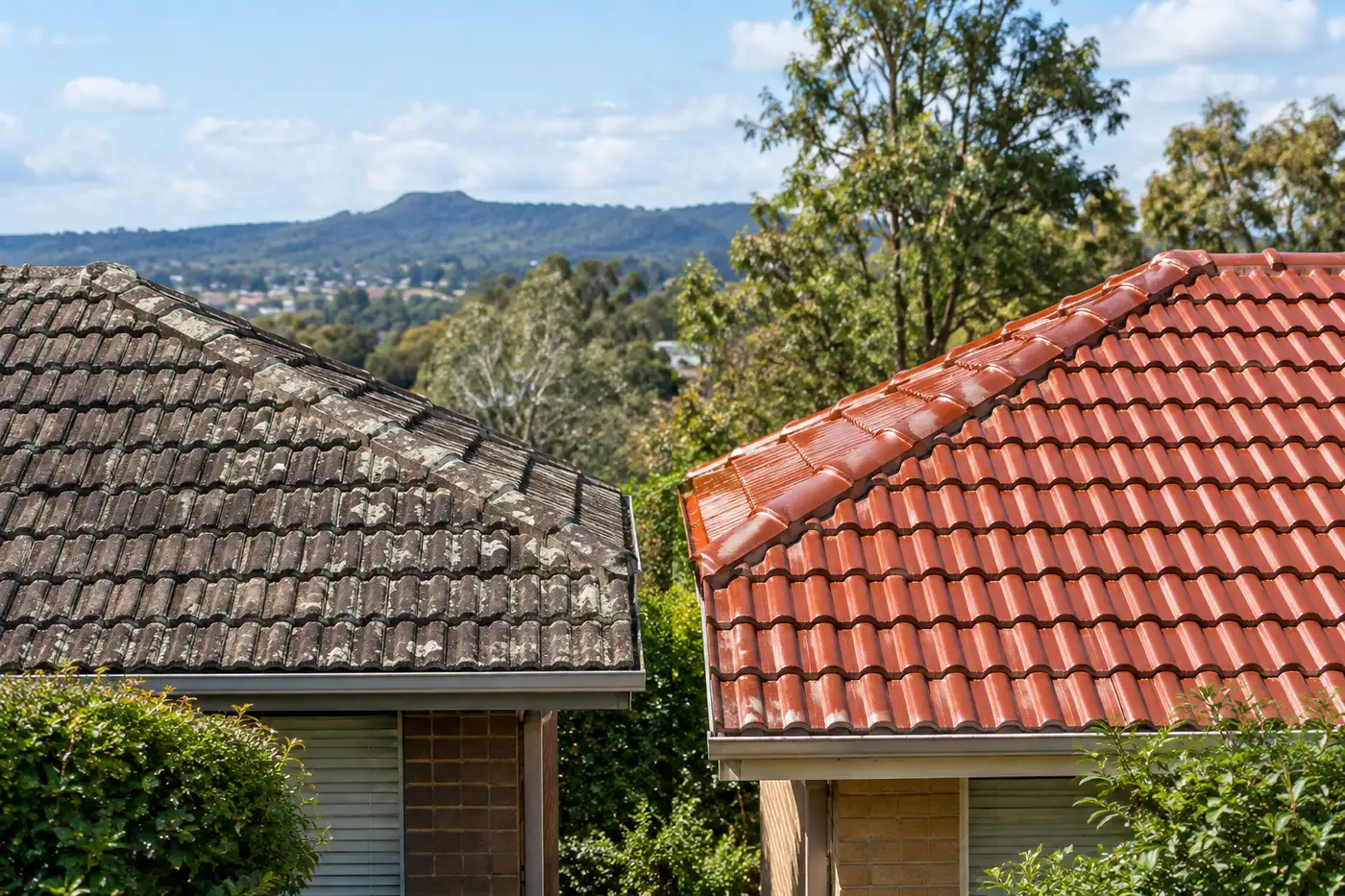
We get a version of this call fairly often. The house next door has just had its roof restored and painted, it looks brand new, and the caller wants to know if they should do the same. Then we go up and find their roof is terracotta while the neighbour’s is concrete, and the right answer for the two houses is completely different.
That is the part most terracotta vs concrete roof tiles comparisons skip. If you are building or re-roofing, the choice matters. But most people asking the question already have a tiled roof, and what they really want to know is what they have, how it will age and what it needs. This post covers both.
The real difference is where the colour lives
Terracotta tiles are made from clay, shaped and fired in a kiln. The colour goes right through the tile. Some are glazed, which gives them a hard, shiny face that sheds water and dirt well. Others are left unglazed, with a matte, earthy finish.
Concrete tiles are a mix of cement, sand and colour pigment, pressed into shape and then given a surface coating at the factory. The coloured face is thin. Under it, the tile is grey.
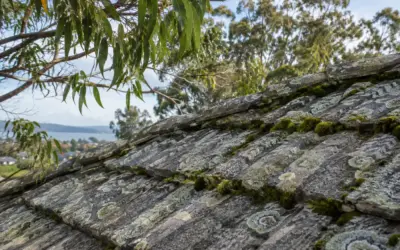
Everything else follows from that. When a terracotta tile weathers, it is still the same colour underneath. When a concrete tile weathers, the coating wears away, the surface goes rough and chalky, and the tile starts to soak up more water. That rough surface is where moss and lichen get a grip, which is why a tired concrete roof often looks blotchy and dark long before anything is actually broken.
How to tell which one you have without climbing up
Please don’t get on the roof to find out. Tiles are slippery, and terracotta in particular can crack under a boot. There are easier ways.
- Check under the house, in the garage or behind the shed. Builders often left a stack of spares.
- Look at any broken piece that has come down. Grey inside with a coloured skin means concrete. The same colour all the way through means terracotta.
- Look from the street with good light. A glossy sheen usually means glazed terracotta. Flat, faded or patchy colour with a sandy look is more often concrete.
- Ask the builder or check the original plans if you have them.
If you are still not sure, we can tell you in a few seconds while we are up there for anything else.
How each tile ages on the South Coast
Nowra throws a bit of everything at a roof. Salt air towards Culburra Beach and Shoalhaven Heads, damp shaded blocks under the trees around Cambewarra and Falls Creek, and long hot summers in between.
Concrete tiles handle all of this reasonably well while the surface coating is intact. Once it goes, they get porous, hold moisture, and grow lichen quickly on the shady side of the house. The tile itself is tough and usually stays sound for a long time. It just stops looking good and stops shedding water as cleanly as it used to.
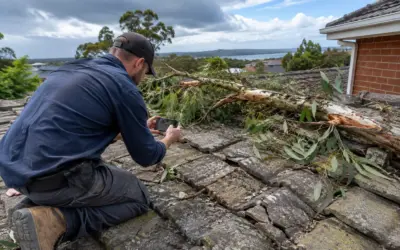
Terracotta keeps its colour, and glazed terracotta stays easy to clean for decades. The weak point is that clay is hard but brittle. A falling branch, a hailstorm or someone walking on the roof the wrong way can crack a tile, and a cracked tile lets water through. Unglazed terracotta can also grow lichen, though it usually cleans up better than old concrete. We cover the warning signs in our post on what cracked roof tiles mean and when to worry.
On both types, the tiles are often not the first thing to fail. The mortar holding the ridge caps in place cracks and lets go, and that is where a lot of tile roof leaks start, whatever the tiles are made of.
Restoring them is a different job
This is where those two houses next door to each other go separate ways.
Concrete roofs usually get the full treatment
A worn concrete roof is the classic restoration job. We clean it, replace any broken tiles, rebed and repoint the ridge caps (repointing is the flexible compound that holds the caps in place and seals the joins), then seal the tiles and apply a roof coating in your chosen colour. The coating is doing real work here. It replaces the factory surface that weathered off, so the tiles stop soaking up water and lichen has less to hold onto.
Terracotta usually needs less, and shouldn’t be painted by default
A terracotta roof with sound tiles rarely needs a coating. We clean it, swap out cracked tiles, and fix the ridge capping. That is often all it needs to look good and stay watertight. Painting glazed terracotta is something we generally talk people out of. Paint does not bond as well to a glazed face, and once a terracotta roof is painted, it has to be repainted from then on. You trade a finish that never needed paint for one that always will.
So in that phone call scenario, the neighbour’s painted roof was the right call for a concrete roof. For the terracotta one, the right call is usually a clean, a handful of replacement tiles and new pointing on the ridges, and that is how we would quote it. Part of the job is telling you when the cheaper option is the right one.
If you would like to see how we approach both types, our tile roofing services in Nowra page walks through the repairs, restoration and replacement work we do on concrete and terracotta.
If you are choosing new tiles
Re-roofing, extending or building? Here is the honest summary.
Concrete costs less to buy and lay. It comes in plenty of profiles and colours, it is solid underfoot, and it suits most homes. The trade-off is that the surface will weather, so you should expect to restore and recoat it at some point down the track.
Terracotta costs more up front. In return, the colour lasts, glazed tiles stay cleaner, and there is no coating to keep up. It is more brittle, so it pays to be careful about foot traffic, especially if you plan to add solar panels or an antenna later.
Matching is the other thing to think about. If you are extending an older house, finding new tiles that match an old profile can be hard with either material. Sometimes the neatest answer is second-hand tiles, and sometimes it is re-roofing the whole house in one material so it all ties in.
And if you are weighing tiles against metal altogether, we compared the two in Colorbond or tiles for a Nowra home.
Get the right advice for the roof you actually have
Ryan Bruce leads our team, with more than 10 years of roofing experience behind the work, and we are fully licensed and insured. We will tell you what your tiles are, what condition they are in and what they genuinely need, then put it in a free written quote that shows what is included and what is not. Have a look at our tile roof repair and restoration work, or get in touch and we will come out and take a look.
Common questions about terracotta and concrete tiles
Which is better for a roof, concrete or clay tile?
Neither wins on every count. Terracotta (clay) keeps its colour and needs no coating, but costs more and is more brittle. Concrete is cheaper and tough underfoot, but its surface weathers and will eventually need restoring and recoating.
How can I tell if my roof tiles are concrete or terracotta?
Look at a spare tile or a broken piece. Concrete is grey inside with a thin coloured surface, and usually has a slightly sandy texture. Terracotta is the same colour all the way through, and glazed terracotta has a shiny face you can often see from the street.
What are the disadvantages of a concrete tile roof?
The factory coating wears off over time, leaving the tile porous and rough. That leads to faded, patchy colour and heavy moss and lichen growth, especially on shaded roofs. Restoring and recoating fixes it, but it is maintenance terracotta largely avoids.
What are the downsides of terracotta roof tiles?
They cost more to buy and install, and fired clay is brittle, so tiles can crack from falling branches, hail or careless foot traffic. Matching an older terracotta profile for repairs can also take some hunting.
Can you paint terracotta roof tiles?
You can, but we rarely recommend it on a roof in good condition. Paint does not grip a glazed surface as well, and once it is painted you are committed to repainting it in future. A clean and new ridge pointing usually gets a terracotta roof looking sharp again.
Do concrete roof tiles need to be sealed?
Once the original surface has weathered, sealing and coating is what stops the tiles absorbing water and growing lichen. It is the main reason a concrete roof restoration includes a coating step, while a terracotta one often does not.