It usually starts with a phone call after a big southerly. Water has come through the ceiling in the hallway, there is a bucket on the carpet, and the first question is rarely about the roof. It is “will my insurance pay for this?” So, does home insurance cover roof leaks? Sometimes. It depends far less on the leak itself than on what caused it, and that is the part most people do not find out until the assessor turns up.
We are roofers, not insurance brokers, and your policy wording is the only thing that settles a claim. But we get up on a lot of leaking roofs around Nowra, and the same pattern comes up again and again. Here is how it tends to play out, and what you can do to give yourself a fair go.
The cause decides the claim, not the water
Most Australian home and building policies split roof leaks into two groups. One is sudden damage from a single event, like a storm, a falling branch or hail. The other is gradual damage, which is what happens when a roof slowly wears out.
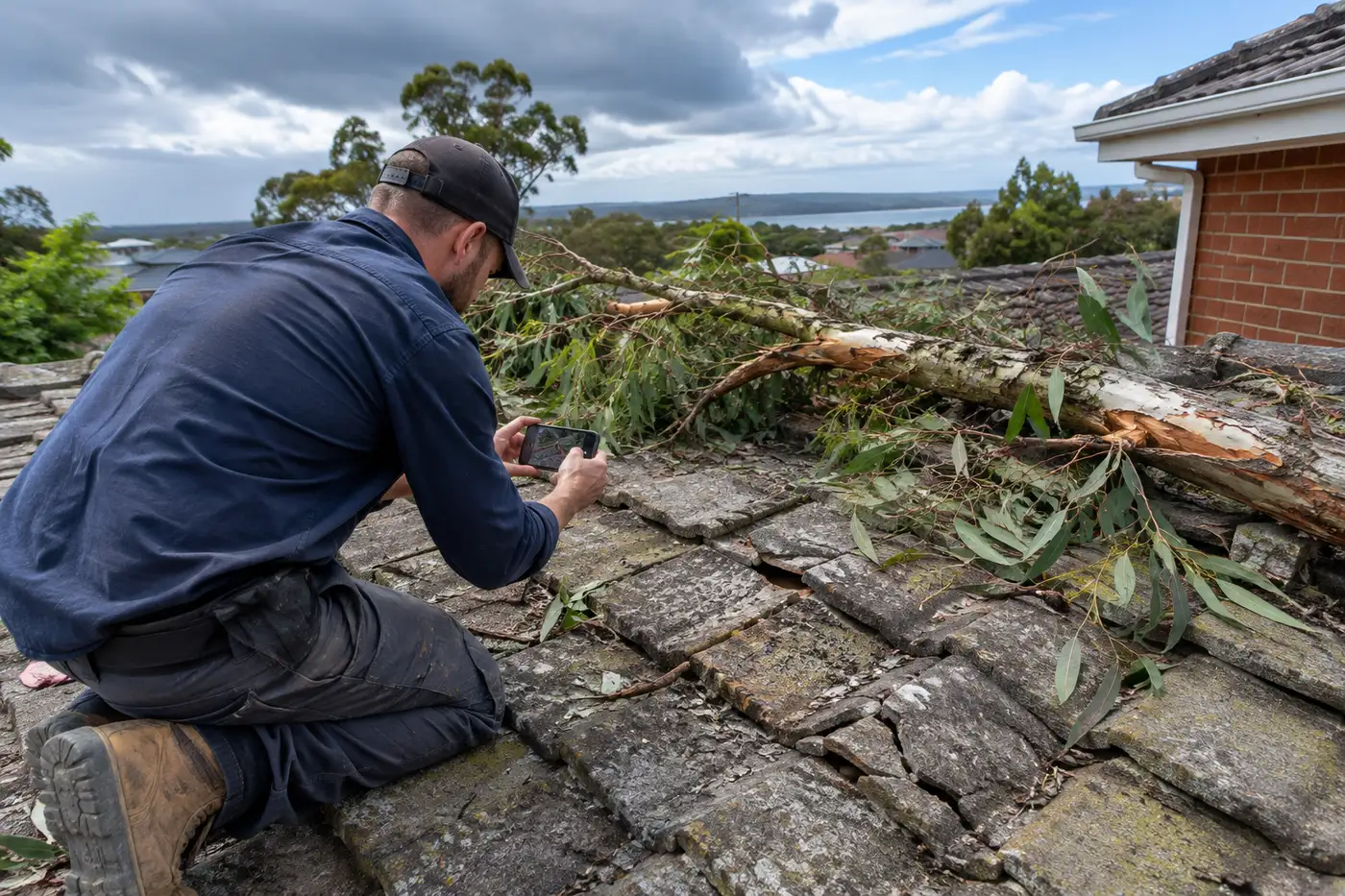
Sudden events are generally what home insurance is built for. If a gum tree drops a limb through your tiles in a storm, that is the kind of thing most policies are written to cover, subject to your excess and the fine print.
Gradual damage is a different story. Policies commonly exclude wear and tear, rust, lack of maintenance and faulty workmanship. That covers a lot of the leaks we actually find. A roof that has been letting in a little water for two winters is, in an insurer’s eyes, a maintenance problem, even if the first time you noticed it was during last week’s storm.
This one catches people out. The storm is what revealed the leak. It is not always what caused it.
Leaks that usually fall on the maintenance side
When we inspect a leaking roof, we are looking for the real entry point and asking how long it has been failing. These are the causes that most often turn out to be long-term wear rather than storm damage:
- Cracked or crumbling bedding and pointing under the ridge caps
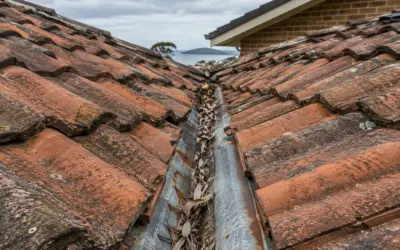
- Rusted valley irons, or valleys packed with leaves that overflow in heavy rain
- Rusted screws, perished washers or corroded sheets on a metal roof
- Flashings that have lifted, or sealant that has dried out and split
- Tiles cracked by foot traffic or age rather than impact
- Gutters rusted through, or blocked and spilling back under the roof
Ridge capping is a good example. The mortar that holds ridge caps in place breaks down slowly over many years, and once it lets go, wind driven rain gets straight in. We have written a separate guide on how to tell when ridge caps need repointing, because catching it early costs far less than the ceiling repair that follows.
Storm damage tends to leave fresh, obvious evidence
Genuine event damage usually looks recent. Tiles snapped clean by a branch, with broken edges that are still sharp and unweathered. Metal sheets or ridge capping peeled back by wind. Hail strikes across a whole roof face. Gutters torn off by a falling limb.
The difference between old and new damage is often visible to someone who knows what to look for. A fresh break in a concrete tile looks different from a crack that has had moss growing in it for years. An assessor will be looking at exactly that, which is why clear evidence matters so much.
Plenty of leaks are a mix of both. A storm can push water through an old weak spot that would have held up in ordinary rain. How an insurer treats that depends on the policy, and it is worth asking them directly rather than assuming either way.
Five things to do before you lodge a claim
When water is coming in, it is easy to rush. A bit of order in the first day or two makes the claim easier to assess and protects your home at the same time.
Stop the damage spreading. Most policies expect you to take reasonable steps to prevent further damage. Move furniture, catch drips, and turn off power to any light fittings that are getting wet. Do not climb onto a wet roof yourself.
Photograph everything. Ceiling stains, wet carpet, damaged belongings, and anything visible from the ground such as missing tiles or a fallen branch. Take the photos before anything is cleaned up or moved.
Read your policy. Look for the sections on storm, water damage, and exclusions for wear and tear or maintenance. The product disclosure statement (the PDS, the document that sets out exactly what you are covered for) is where the real answers live.
Call your insurer early. Ask whether they want to send their own assessor or roofer, and whether you can arrange temporary repairs first. Some insurers want to see the damage before anything is touched. Others are happy for an emergency tarp to go on straight away.
Get a roofer to find the actual cause. A clear written description of what failed, where, and why gives you something solid to work with, whether the claim goes ahead or not.
A proper inspection helps whichever way the claim goes
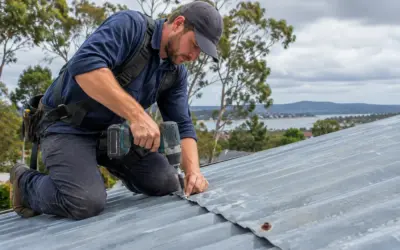
When we look at a leak, we do what we do on every job. We get up on the roof, find where the water is really getting in, explain what we found in plain English and price the repair in writing. That written quote spells out what is included and what is not, so you (and your insurer, if they ask) can see exactly what the job involves.
If the cause turns out to be storm damage, that paperwork supports your claim. If it turns out to be wear and tear, you at least know the true cause and can fix it properly, instead of patching the ceiling and waiting for the next downpour. Our roof leak repair service covers tile and metal roofs on homes and commercial buildings across Nowra and the Shoalhaven.
Sometimes the leak is coming from somewhere unexpected. Water can travel along battens and sarking (the foil layer under the tiles or sheets) a long way before it drips onto a ceiling, so the stain is often nowhere near the hole. If yours only shows up in a real downpour, our guide to why roofs leak in heavy rain explains the usual culprits.
Regular maintenance makes any future claim stronger
Because so many claims hinge on whether a roof was kept in reasonable condition, regular upkeep does two jobs. It stops most leaks before they start. And if a real storm does hit, it makes it much harder for anyone to argue the damage was really neglect.
On the coast, that means keeping an eye on the parts that salt air and leaf litter wear out first: valleys, gutters, flashings, screws and ridge pointing. A roof that is cleaned out, checked and repaired when small problems appear has a clear history. Keep the invoices and photos from any work you have done, because they are useful evidence if you ever need to show the roof was looked after.
Common questions about roof leaks and insurance
Does home insurance cover a leaking roof in Australia?
It can, if the leak was caused by a sudden insured event such as a storm or a falling tree. Most policies exclude leaks caused by wear and tear, rust, poor maintenance or faulty workmanship. Your product disclosure statement sets out the exact terms for your policy.
What is the most common roof damage insurance does not cover?
Gradual deterioration is the big one. Cracked ridge pointing, rusted valleys and sheets, perished screw washers and blocked gutters are usually treated as maintenance issues. They are also some of the most common leak sources we find on older Nowra roofs.
Will insurance pay to replace my whole roof?
Generally an insurer pays to repair the damage the insured event caused, not to replace a roof that was already worn out. If storm damage is widespread, a larger replacement may end up part of the claim, but that is the insurer’s decision based on their assessment.
Can I fix the roof before the insurance assessor comes?
Ask your insurer first. Temporary work to stop more water getting in, like a tarp, is usually expected. Permanent repairs before an assessment can make a claim harder, so photograph everything and get the insurer’s go ahead.
What should I tell my insurer about a roof leak?
Stick to the facts: when you noticed the leak, what the weather was doing, and what damage you can see. Do not guess at the cause or say it has been leaking for a while if you do not actually know. A roofer’s written findings are a better source for the cause than a guess made on the phone.
How much does it cost to fix a leaking roof?
It depends entirely on the cause. A few cracked tiles or a loose flashing is a small job, while a failed valley or rusted sheets is more involved. We give a free written quote after inspecting the roof, so you know the cost before deciding whether to claim or simply fix it.
Get the real cause in writing
If water is coming through the ceiling and you are unsure whether to call your insurer or a roofer first, the answer is usually both. Ryan Bruce leads our team, we have more than 10 years of roofing experience behind the work, and we are fully licensed and insured. We will find where the water is getting in and give you a free written quote to repair the leak properly, so you can decide what to do next with the facts in front of you.