You are standing in the backyard and you notice it: grey green crusty patches spreading over the tiles on the shady side of the roof, and soft clumps of moss sitting in the gaps where the tiles overlap. Most people ask us the same two things. Is it hurting the roof, and can I just get up there and scrub it off? Moss and lichen on roof tiles are common across the Shoalhaven, and the honest answer to both questions is “sometimes”. Here is how we decide, and how to remove it without doing more damage than the growth ever would.
Moss and lichen are not the same problem
They often turn up together, but they behave differently on a roof.
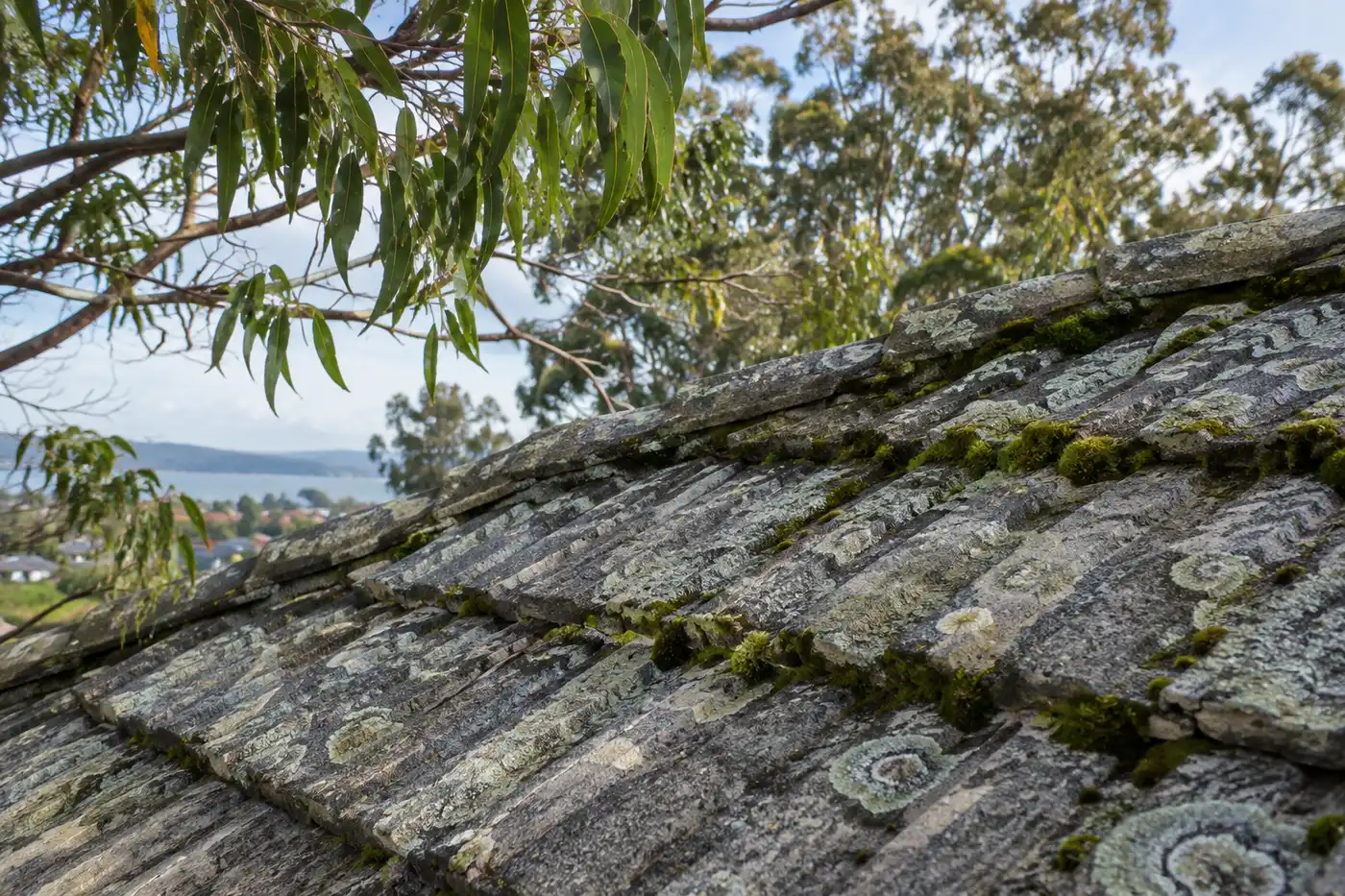
Moss is soft, green and spongy. It grows where water and dirt collect: along the overlaps between tiles, in valleys, behind ridge caps and anywhere leaves break down. Its main trick is holding water like a sponge.
Lichen is the flat, crusty growth in grey, pale green, yellow or orange rings. It is actually a fungus and an alga living together, and it anchors itself into the surface of the tile with tiny root-like threads. It grows slowly. It also hangs on long after it has been killed, which surprises a lot of people.
There is usually some mould and black algae streaking in the mix as well. That part is mostly cosmetic. Moss and lichen are the two worth taking seriously.
Why roofs around Nowra grow so much of it
Growth needs moisture, shade and somewhere to take hold. Plenty of Shoalhaven roofs offer all three. Humid coastal air, morning dew that sits on south facing slopes for hours, and big gum trees dropping leaves and bark onto the roof all help. Homes tucked into bush blocks around Cambewarra, Falls Creek and the hills behind Berry tend to show it first, but we see it right through town as well.
The tile matters too. Concrete tiles are more porous than terracotta, and once their original surface coating wears away they hold moisture and give lichen an easy grip. Glazed terracotta is much harder for anything to stick to. On an older, unsealed concrete tile roof, heavy lichen is almost expected.
When it actually damages the roof
A light dusting of lichen on a sound roof is mainly a looks problem. It becomes a maintenance problem when any of these start happening:
- moss building up in the tile overlaps and valleys, so rainwater is held back and pushed sideways under the tiles instead of running off
- clumps breaking away and washing into gutters and downpipes
- lichen keeping the face of concrete tiles damp, which speeds up their breakdown over the years
- moss packing in around ridge caps and loosening the pointing (the flexible bedding that holds the caps on)
Water held against a roof for long enough finds a way in. If you already have growth and a damp patch on the ceiling, the two are often connected, though cracked tiles and failing ridge pointing are just as likely. Our post on what causes cracked roof tiles covers the other side of that.
Removing it properly takes two stages
Most of the bad results we see come from skipping straight to blasting. Doing it well is slower.
Stage one: kill it first
A roof treatment designed for moss, lichen and mould is applied and left to work. Moss dies and browns off fairly quickly. Lichen is stubborn. Product makers themselves say some growth can take weeks to show any sign of dying, and dead lichen can sit on the tile, faded and bleached, for a good while before rain and wind clear it. That is normal. It is not a sign the treatment failed.
Stage two: clean it off without stripping the tile
Once the growth is dead, the roof can be cleaned. This is where care matters. A high pressure clean at the wrong angle or too close will cut into the face of a concrete tile and leave it rougher and more porous than before, which means faster regrowth. On terracotta it can drive water up under the laps and into the roof space. We adjust pressure to suit the tile, work down the slope with the overlaps (never against them) and keep the debris out of the gutters.
If you are weighing up whether to bring someone in, our roof cleaning service page explains what a professional clean involves for tile and metal roofs.
The DIY risks people underestimate
We are not going to pretend a homeowner can never treat their own roof. But a few things go wrong often enough to mention.
The biggest one is the fall. Mossy tiles are slippery even when dry, and wet lichen is worse. A single storey roof is still high enough to cause a serious injury. If you are not comfortable working at height with proper fall protection, stay on the ground.
Next is broken tiles. Concrete and terracotta tiles crack under a boot if you step in the wrong spot, and a cleaning job can turn into a repair job very quickly. Roofers walk on the lower edge of each tile, where it is supported by the one below, for exactly this reason.
Then there is the runoff. Many moss and lichen treatments are chlorine based. Rinse water ends up in gutters, garden beds and, if you are on tank water, possibly your tank. Disconnect the downpipe to any rainwater tank before treating the roof and protect plants below the drip line.
Finally, scrubbing or scraping dry lichen by hand tends to tear the tile surface off with it. Killing it first saves the tile.
Sometimes a clean is the start of something bigger
A clean on its own makes sense when the tiles are sound and the pointing is in good order. It lifts the look of the house and takes away the moisture trap. On a shaded roof the growth will come back in time, though regular treatment slows it down.
If the clean exposes worn, porous tiles, a run of cracks or crumbling ridge caps, the job usually becomes the first stage of a restoration: clean, repair, repoint, then coat the tiles with a sealer and roof paint so they shed water again and give lichen less to grip. If you are at that point, our guide to restoration pricing in Nowra explains what moves the number.
Either way, we look first and tell you which one your roof needs. Ryan Bruce leads the team, we have more than 10 years of roofing experience behind the work, we are fully licensed and insured, and every quote comes in writing.
Want the growth gone without wrecking the tiles?
If your roof is going green and you want it dealt with safely, see how we handle tile and metal roof cleaning around Nowra, then give us a call. We will check the roof, tell you in plain English whether it needs a clean, a repair or more, and give you a free written quote.
Common questions about moss and lichen on roofs
What kills lichen on roof tiles?
A biocide roof treatment made for moss, lichen and mould is the usual answer, applied to the roof and left to work rather than rinsed straight off. Lichen dies slowly, so it can take weeks before it changes colour. Dead lichen then fades and washes away over time or gets removed with a gentle clean.
Should you remove lichen from the roof?
On a sound roof with a few small patches, it is not urgent. Heavy coverage on concrete tiles is worth treating, because it keeps the tile surface damp and helps break it down. If moss is also packing into overlaps, valleys or ridge caps, deal with it sooner.
Is lichen on a roof damaging?
Slowly, yes, mostly on porous concrete tiles. It holds moisture against the tile and its threads work into the surface. It rarely causes a leak on its own, but combined with moss blocking the water’s path, it can.
Can you pressure clean moss off roof tiles?
You can, but it is easy to do harm. Too much pressure strips the face of concrete tiles and can force water under terracotta laps. Kill the growth first, then clean with pressure suited to the tile and with the slope, not against it.
What kills lichen naturally?
Some people try baking soda or vinegar. Results are mixed, and some lichens cope with those conditions well. They also need repeat applications and a lot of patience on a whole roof, so most homeowners end up using a purpose made treatment.
Will moss and lichen come back after cleaning?
On shaded, humid roofs, eventually yes. Trimming overhanging branches, keeping gutters clear, and sealing and coating worn concrete tiles all slow regrowth. Periodic treatment keeps it under control between cleans.