The call usually goes something like this. It rained hard overnight, there is a brown stain on the ceiling that wasn’t there last week, and it sits in a rough line along one corner of the room. When we get up on the roof, that line more often than not runs straight under a valley. Roof valley repair is one of the most common jobs we do around Nowra. It is also one of the most commonly botched, because the visible symptom is rarely where the actual fault is.
A valley does more work than any other part of your roof
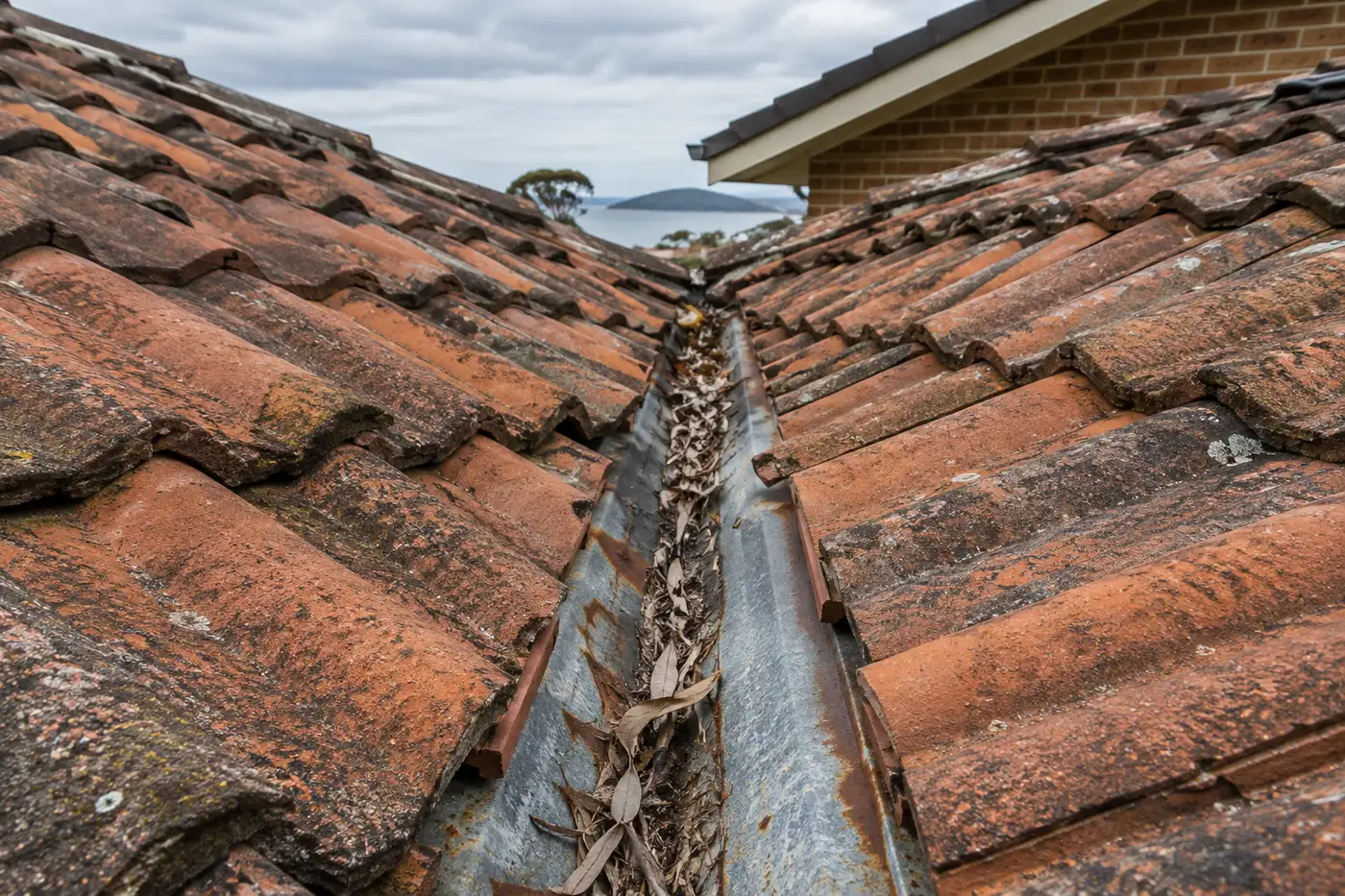
A valley is the inside corner where two sloping sections of roof meet. Think of an L-shaped house. Where the two wings join, the roof forms a channel, and every drop of rain landing on both of those sections gets funnelled into it.
On a tile roof, that channel is a long metal tray called a valley iron. It sits on timber valley boards, and the tiles on each side are cut on an angle so they overhang the tray. On a metal roof, the sheets finish over a valley gutter or valley flashing that does the same job.
So a valley carries far more water than the open roof beside it, and it carries it fast. When anything slows that flow, water backs up and goes sideways.
Five reasons valleys leak, from most to least common
Leaves and debris damming the channel
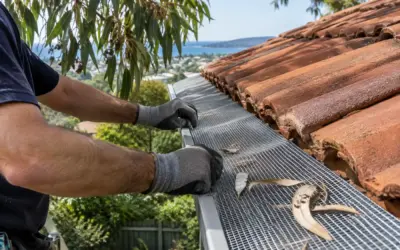
This is the big one on homes with trees nearby, and in the Shoalhaven that is a lot of homes. Gum leaves and bark settle in the valley, rot into sludge and form a little dam. In a downpour, water rides over the edge of the valley iron and runs under the tiles. We cover the other heavy rain culprits in our post on why roofs leak in a downpour.
Rust through the valley iron
Older houses often have galvanised valley irons. Wet debris sitting against the metal holds moisture there for weeks at a time, which is exactly what rust needs. Homes closer to the water, around Culburra Beach and Shoalhaven Heads, also have salt air to contend with. Once the metal pits through, no amount of cleaning will fix it.
Cut tiles that have slipped or cracked
The tiles along a valley are cut, so they lose the interlocking edge that holds a full tile in place. They are held by bedding mortar and pointing, or by clips. When that bedding cracks, the cut tiles can creep down into the channel and narrow it, or lift and let wind drive rain underneath. Cracked bedding along a valley is the same problem we describe in our guide to when ridge caps need repointing, just in a different spot.
Water overshooting at the bottom
A valley dumps a concentrated stream of water into the gutter at one point. If the gutter there is blocked, sagging or too small, water overflows into the eaves and looks like a roof leak from inside. We always check the bottom of the valley before blaming the valley itself.
Old patch jobs
We see plenty of valleys smeared with silicone or roofing sealant from a previous fix. Sealant moves, cracks and peels in the sun, and it often traps water rather than shedding it. A patched valley is usually a valley that needed replacing a few years ago.
What you can check from the ground
Please don’t climb onto a tile roof to look. Tiles crack underfoot and valleys are steep, slippery places. But from the yard, an upstairs window or a ladder held at the gutter line, you can often spot:
- leaves or sludge piled along the valley line
- orange or brown streaks on the metal
- tiles along the valley edge sitting out of line with their neighbours
- crumbling mortar or gaps beside the cut tiles
- water stains on the eaves lining directly below where the valley meets the gutter
Inside, a stain that tracks from an internal corner of the house, or appears only after wind driven rain from one direction, points strongly to a valley. A dated photo of it helps us match the stain to the roof.
Repair or replace: how we decide
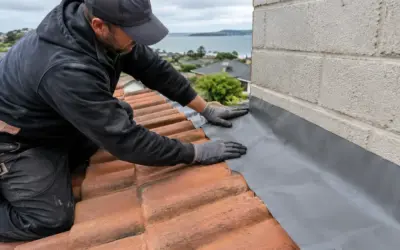
A clean and reset is enough when the valley iron is still sound. If the metal has surface marks but no pitting or holes, we clear the debris, reseat any slipped cut tiles, replace cracked ones and re-bed and repoint along the edge. That fixes a large share of the valley leaks we’re called to.
Replacement is the honest answer once the iron has rusted through, has been patched more than once, or is so pitted that it will fail in the next big storm. Patching a rusted valley is money spent twice. A proper valley iron replacement means lifting the cut tiles on both sides, removing the old valley, checking the valley boards underneath for rot, fitting a new valley and relaying the tiles with fresh bedding and pointing.
The boards matter. Laying new metal on soft, rotten timber gives you a valley that sags and holds water, so we check them every time and tell you before doing anything extra.
What changes the price of valley work
We won’t quote a figure here, because two valleys on the same street can be very different jobs. These are the things that move the price:
- how long the valley is and how many valleys the roof has
- roof pitch and height, which decide how much safety gear is needed
- tile type and age, since old, brittle tiles break when lifted and need replacing
- the state of the valley boards
- whether the gutter at the bottom needs work too
Every quote we give is free and in writing, with what is included and what is not. If a clean and repoint will do the job, we’ll say so rather than sell you a replacement.
Keeping a valley working once it’s fixed
If trees overhang the roof, a new valley will fill up again just like the old one. Keeping branches trimmed back and getting valleys and gutters cleared before the wetter months makes the biggest difference.
If you have a stain spreading on the ceiling or you can see rust in a valley from the ground, call Ryan Bruce and the team on (02) 4409 2597. We have more than 10 years of roofing experience across Nowra and the Shoalhaven, we’re fully licensed and insured, and we’ll tell you plainly if your valley needs a repair or a new valley iron fitted.
Common questions about roof valleys
What is the valley on a roof called?
It is simply called a roof valley. The metal channel inside it is called a valley iron or valley tray on a tile roof, and a valley gutter or valley flashing on a metal roof. The tiles along each side are called valley cut tiles.
How can I fix a leak in my roof valley?
Start by getting the valley inspected so the cause is clear. If it is blocked, clearing it may stop the leak straight away. If cut tiles have slipped or the bedding has cracked, they need reseating and repointing. If the metal has rusted through, the valley iron needs replacing, and sealant over the hole will only buy you a short time.
Why does my roof valley only leak in heavy rain?
In light rain a partly blocked valley still copes. In a downpour the water rises above the edges of the valley iron, or backs up behind debris, and runs sideways under the tiles. So the leak shows up after a big storm, then seems to vanish until the next one.
Is it expensive to fix a leaking roof valley?
A clean, reseat and repoint costs far less than a full valley replacement, so the answer depends on the condition of the metal. Length, roof height, tile condition and the state of the timber underneath all affect the price. A written quote after an inspection is the only reliable figure.
Can I repair a roof valley myself?
We’d advise against it. Valleys are steep and slippery, tiles crack underfoot, and replacing a valley means lifting and relaying cut tiles correctly. Checking from the ground and keeping overhanging branches trimmed are the jobs worth doing yourself.