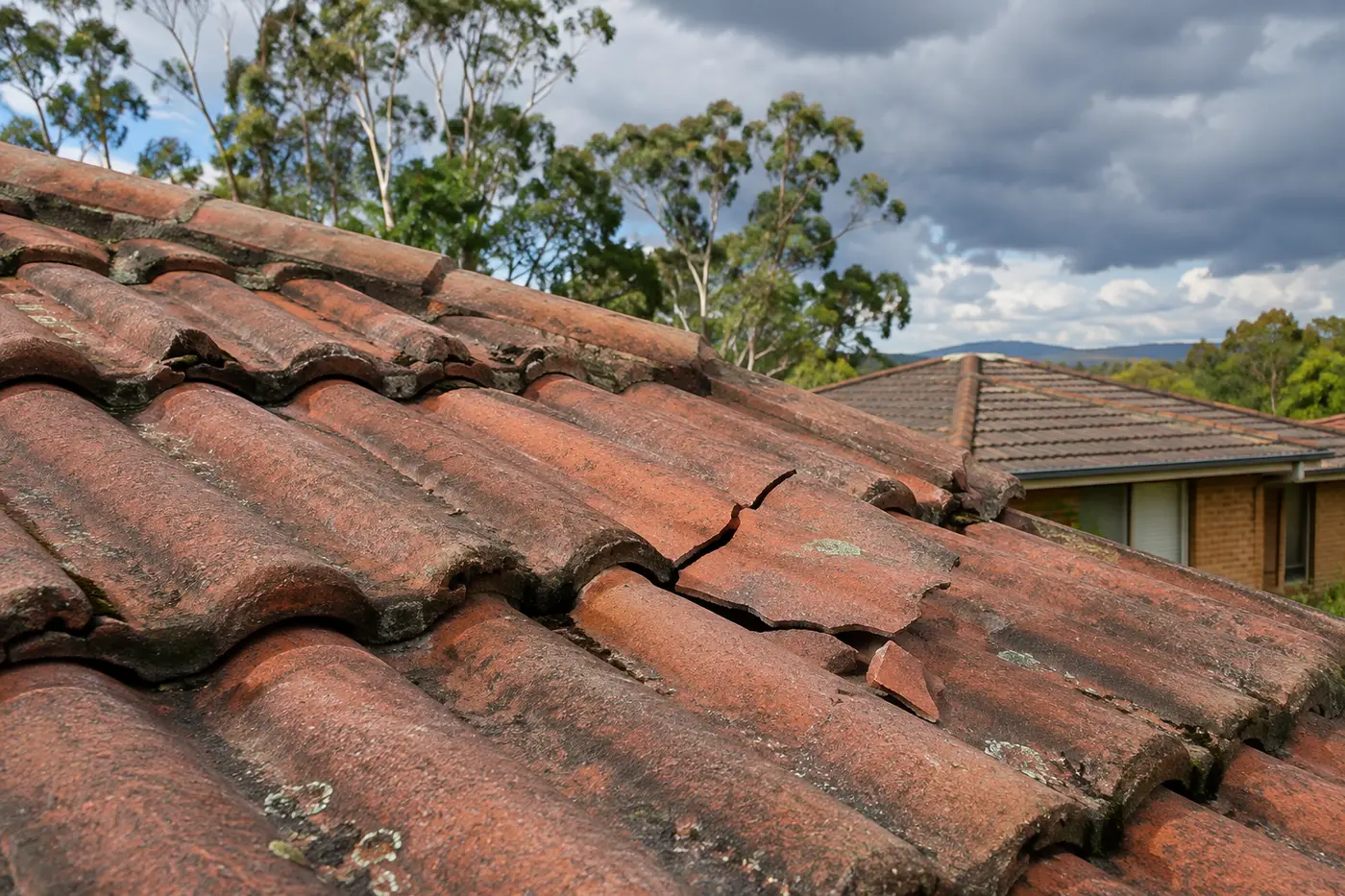
It usually starts with something small. A brown ring on the ceiling after a southerly, a bit of broken terracotta sitting in the gutter, or the antenna installer mentioning on the way out that a couple of tiles are cracked up there. Cracked roof tiles are one of the most common things we get called about around Nowra, and the good news is that most of them are a quick, inexpensive fix if they are dealt with before the water has had months to work its way in.
Here is what we look for, what actually causes the damage, and how to tell a simple tile swap from a roof that is trying to tell you something bigger.
A tile roof only works when every tile does its job
Tiles keep water out by overlapping. Each row laps over the one below it, and rain runs down the face of the tiles into the gutter. There is no glue holding the system together and no seal between the tiles. It relies on every tile being whole.
A crack breaks that chain. Water that should be running over the tile now drips through it, onto whatever sits underneath. On newer homes that is usually sarking, a reflective foil layer that catches stray water and sends it down to the gutter. Plenty of older Shoalhaven homes were built without sarking at all, so the water lands straight on the timber battens, the insulation and then the ceiling.
That is why a crack the width of a fingernail can produce a stain a metre across. The tile is the cause. The ceiling is just where you finally notice it.
What cracks tiles on Shoalhaven roofs
When we trace a cracked tile back to its cause, it is nearly always one of a handful of things.
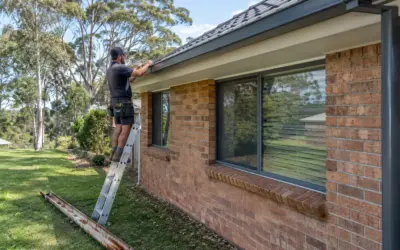
- Foot traffic. The single biggest cause we see. Antenna and satellite installs, solar jobs, air conditioning runs and well-meaning gutter cleaning all put people on the roof, and a tile stepped on in the wrong spot snaps.
- Branches and storm debris. Gums drop limbs in wind, and a heavy branch landing on a tile roof rarely misses everything.
- Hail. Older, more brittle tiles take hail badly, and the damage is often spread across a whole face of the roof.
- Age. Concrete tiles lose their surface coating over the years and start to absorb water. Terracotta gets more brittle. Either way, an old tile breaks under loads a new one would shrug off.
- Movement. Tiles heat up and cool down every day. Where the house has shifted, or tiles were laid too tight, that movement can split them.
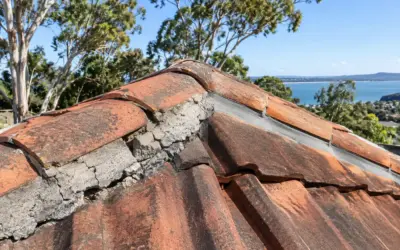
Cracked ridge capping (the curved tiles running along the peak and hips) is a slightly different problem, because those tiles sit in a bed of mortar. If the cracks are along the top of the roof, our post on signs your ridge caps need repointing is the better read.
You can spot most cracks without going up a ladder
There are a few safe checks you can do from the ground and from inside.
From the yard, walk around the house with a pair of binoculars on a clear day. Look for tiles sitting at a different angle to their neighbours, a dark line across a tile, a missing corner, or one tile that looks a different colour. Broken fragments in the gutters or on the ground below the eaves are another giveaway.
The roof space tells you even more. On a sunny afternoon, go up with a torch, switch it off once you are settled and let your eyes adjust. Pinpricks of daylight where there is no sarking often mean a crack or a slipped tile. Look for water stains on the timber, damp or flattened insulation, and rust marks on nails. Stay on the ceiling joists, never on the plasterboard between them.
Then there is the obvious one: a stain on the ceiling or water dripping during rain. If it only shows up in a downpour, our guide to why roofs leak in heavy rain covers the other causes worth ruling out, because a cracked tile is only one of them.
Sealant buys time. A replacement tile fixes it.
People ask us all the time whether a cracked tile can just be glued. It can be patched, and sometimes that is the sensible first step. A flexible roofing sealant run along a hairline crack will slow the water down and can hold through a wet week until the tile is replaced.
It is not a permanent repair. The sealant ages in the sun, the tile keeps moving, and the crack usually opens up again. A cracked tile is also weaker than its neighbours, so the next person who walks on it will probably break it outright.
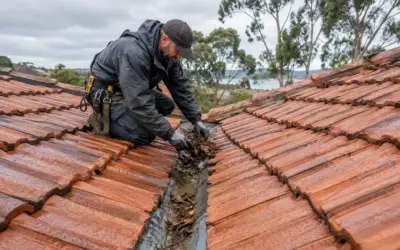
The proper fix is to lift the surrounding tiles, slide the broken one out and fit a matching tile in its place. Matching is the part that takes experience. Tile profiles and colours have changed a lot over the decades, and some older ranges are no longer made. When an exact match cannot be found, one approach is to borrow a tile from a part of the roof nobody sees and put the replacement there instead, so the faces you look at every day still match.
This is everyday work for us. Our tile roof repair service handles single cracked tiles, slipped tiles and storm damage on both terracotta and concrete roofs.
Please leave the roof to someone with the right gear
We understand the temptation to pop up and swap a tile yourself. We would still talk you out of it. Tile roofs are slippery, especially with lichen on them or a bit of morning dew, and falls from roof height cause serious injuries.
There is a practical reason too. Walking on tiles takes a specific technique, stepping on the lower edge where each tile is supported by the one beneath. Without it, it is very easy to crack two or three new tiles while fixing one, which turns a small job into a bigger one.
When a few cracks point to a bigger job
One or two cracked tiles after a tradesperson has been on the roof is a repair. That is the most common outcome by far.
It is a different story when we find cracks spread across every face of the roof, tiles that crumble at the edges when handled, or concrete tiles that have gone soft and chalky. That tells us the tiles themselves are near the end of their working life. Fixing them one at a time becomes a cycle, because every visit to replace one tile risks breaking another.
In that situation we will explain what we are seeing and lay out the honest options, which might be a full restoration or, if the tiles are past saving, a replacement. We will also tell you when the cheaper repair is the right call, and for most of the cracked tiles we see, it is.
If water is coming in right now
Put a bucket under the drip and move furniture, rugs and electronics out of the way. If the ceiling is bulging with water, keep people out from under it and turn off power to light fittings in that area. Take a few dated photos of the stain and any damage in case you need them for an insurance claim. Then give us a call so we can find the cracked tile and get it sorted before the next rain.
Get your cracked tiles looked at properly
Roof Restoration Nowra is led by Ryan Bruce, with more than 10 years of roofing experience behind the work, and we are fully licensed and insured. We will come out, find the damage, explain it in plain English and give you a free written quote. Call (02) 4409 2597 or start with our broken and cracked tile repairs page.
Common questions about cracked roof tiles
How much does it cost to fix cracked roof tiles?
It depends on how many tiles are cracked, whether a matching tile is easy to source, how steep and high the roof is, and whether any water damage needs attention underneath. A single tile replacement is usually a small job. We quote every repair in writing after we have looked at the roof, so you know the price before any work starts.
Can you fix a cracked roof tile without replacing it?
A hairline crack can be sealed with a flexible roofing sealant, and that will usually stop the water for a while. It is a temporary measure, though, because the tile stays weaker than the rest and the crack tends to open again. Replacing the tile is the repair that lasts.
Can cracked roof tiles be glued?
Ordinary glue will not hold on a roof that heats and cools every day. A purpose-made flexible sealant can bridge a fine crack as a short-term patch, but a tile that is split right through or missing a piece needs to come out.
What do roofers use to seal cracks in tiles?
Roofers use flexible sealants made for outdoor roofing, which stay elastic as the tile expands and contracts. We use them as a stopgap on hairline cracks and replace the tile itself whenever the crack is letting water through.
What causes cracked roof tiles?
The most common cause we see is people walking on the roof, followed by falling branches, hail and storm debris. Age plays a big part too, because older concrete tiles absorb water and terracotta grows more brittle, so both break more easily.
Is one cracked tile urgent?
It is not an emergency on a dry day, but it should not wait months either. Every rain lets a little more water onto the battens and insulation, and damage under the tiles costs far more to fix than the tile itself.