When Should You Arrange Roof Repairs in Nowra?
A small roofing problem can often be relatively straightforward to repair when it is identified early. Left unattended, however, the same defect may allow water to affect other parts of the roof or building.
Homes around Nowra are exposed to sun, wind, heavy rain and changing weather conditions throughout the year. Over time, these conditions can contribute to deterioration in tiles, metal roofing, flashings, valleys, ridge capping, fixings and sealants.
The important part is finding the actual cause of the problem.
A ceiling stain does not always sit directly below the point where water entered the roof, and simply sealing the most obvious area may not provide a lasting solution.
Learn more about our roof repair services in Nowra.
Common Roof Problems in Nowra
Both tile and metal roofs can develop localised defects as they age.
Common issues include:
- Cracked or broken roof tiles
- Slipped or displaced tiles
- Rust and corrosion on metal roofing
- Loose or deteriorated fixings
- Damaged flashing
- Deteriorated ridge pointing
- Loose ridge capping
- Valley deterioration
- Failed sealants
- Leaks around roof penetrations
- Storm-related damage
- Previous repairs beginning to fail
Not every one of these problems requires major roofing work.
A professional inspection should establish whether the damage is contained or part of broader deterioration.
Signs Your Roof May Need Repair
Some roofing problems are clearly visible, while others first appear inside the home.
Warning signs can include:
- Water stains on ceilings or walls
- Dripping during rain
- Damp areas in the roof space
- Cracked or missing tiles
- Visible rust
- Loose roof sheets
- Cracked ridge pointing
- Deteriorated flashing
- Water marks around skylights or penetrations
- New leaks following strong wind or rain
- Debris collecting in valleys
- Previous patches deteriorating
If you notice a new problem after severe weather, avoid climbing onto the roof yourself.
Many defects can be initially described or photographed safely from ground level.
Why Roof Leaks Can Be Difficult to Find
One of the most important parts of roof repair is identifying where water is actually entering.
Water can travel along:
- Roof sheets
- Tiles
- Sarking
- Timber framing
- Battens
- Flashings
- Other internal surfaces
before it becomes visible inside the home.
For example, a stain on a ceiling may be caused by a defect several metres away.
This is why successful leak repairs should focus on diagnosis rather than simply applying sealant near the visible symptom.
Tile Roof Repairs in Nowra
Tile roofing can develop localised problems without the entire roof needing replacement.
Typical issues may include:
- Cracked tiles
- Broken tiles
- Displaced tiles
- Loose ridge capping
- Deteriorated pointing
- Valley problems
- Flashing deterioration
- Leaks around penetrations
Where the surrounding roof remains serviceable, damaged components can often be repaired individually.
The wider roof should still be checked, particularly if several different defects are appearing at the same time.
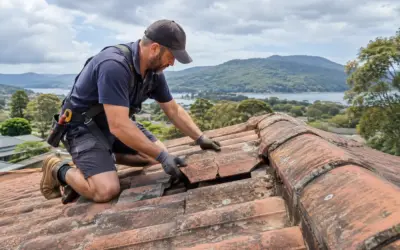
Cracked and Broken Roof Tiles
Tiles can become damaged due to:
- Age
- Falling branches
- Strong weather
- Foot traffic
- Work by other trades
- Previous repairs
A damaged tile should be assessed together with the surrounding roofing.
Replacing one tile may be sufficient where the problem is isolated, but repeated breakages across different areas can indicate that the roof needs broader attention.
Ridge Capping and Repointing
Ridge capping covers the peaks and junctions of tiled roofs.
Over time, bedding and pointing materials can deteriorate due to movement and weather exposure.
Signs may include:
- Cracked pointing
- Crumbling mortar
- Loose ridge tiles
- Gaps along ridge lines
- Water entry around roof junctions
Depending on its condition, the ridge may need local repair, repointing or more extensive work.
There is no fixed age at which every tiled roof automatically needs repointing. The actual condition should determine the scope.
Metal Roof Repairs in Nowra
Metal roofs develop different repair requirements.
Common issues can include:
- Surface rust
- Corrosion
- Loose screws
- Deteriorated washers
- Damaged sheets
- Failed sealant
- Loose roof components
- Flashing problems
- Leaks around penetrations
A suitable localised defect may be repairable without replacing the entire roof.
However, advanced corrosion needs careful assessment.
Once metal roofing becomes badly perforated or extensively weakened, repeated patching may no longer be the most practical approach.
Rust and Corrosion
Rust can begin in relatively small areas, particularly around:
- Fixings
- Sheet edges
- Flashings
- Penetrations
- Previous scratches or damage
- Areas where water or debris collects
Surface corrosion and serious material failure are not the same thing.
Minor deterioration may sometimes be treated and repaired, while deeper corrosion may require replacement of the affected material.
Simply painting over significant rust does not restore the strength of damaged steel.
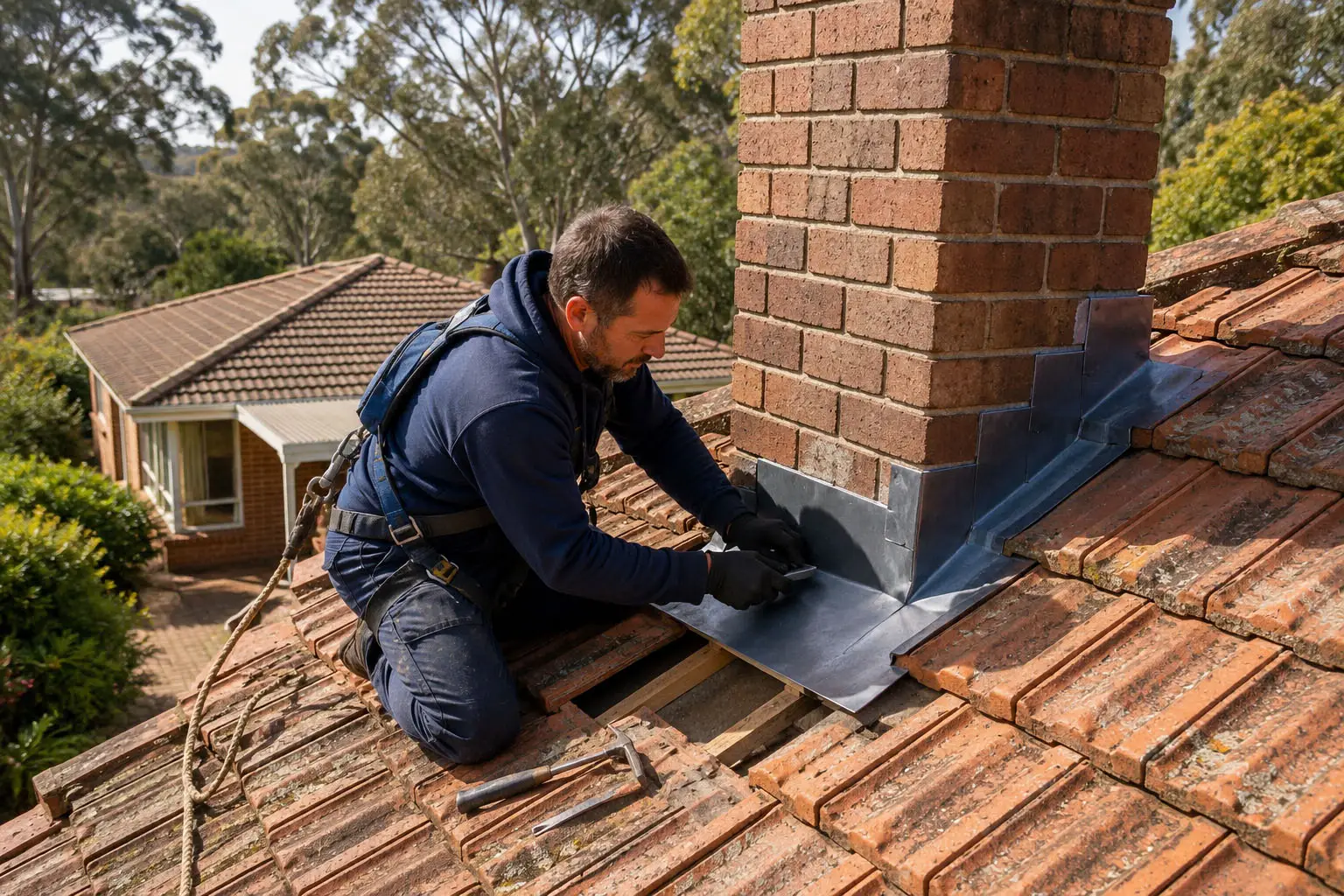
Flashing Repairs
Flashings help protect vulnerable roof junctions from water entry.
They are commonly found around:
- Walls
- Roof penetrations
- Chimneys
- Vents
- Changes in roof level
- Other junctions
Problems may develop through:
- Age
- Corrosion
- Movement
- Loose fixings
- Failed sealant
- Previous poor repairs
A roof may leak even when the main tiles or sheets remain in good condition if one flashing detail has failed.
Roof Valley Problems
Valleys direct water from adjoining roof slopes towards the gutter system.
Because they carry concentrated rainfall, defects can lead to significant water entry.
Potential issues include:
- Corrosion
- Damage
- Debris build-up
- Movement of adjacent tiles
- Poor previous repairs
- Failed valley material
Where a valley is significantly deteriorated, replacement may provide a better solution than repeated patch repairs.
Leaks Around Skylights and Roof Penetrations
Leaks around skylights, vents or other roof penetrations do not always mean the unit itself has failed.
The cause may instead involve:
- Flashing
- Adjacent tiles
- Sealants
- Fixings
- Roofing around the penetration
The surrounding roof should therefore be inspected before deciding what needs replacing.
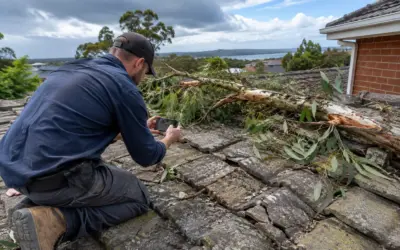
Storm-Related Roof Damage
Strong wind and heavy rain can expose weaknesses that were previously unnoticed.
Possible damage may include:
- Broken tiles
- Displaced roofing
- Loose metal sheets
- Damaged ridge capping
- Flashing movement
- Impact damage
- New leaks
Not every problem appearing after a storm is automatically severe.
The roof should be assessed to establish the extent of the damage before deciding whether repair, restoration or replacement is appropriate.
What Should You Do If Your Roof Starts Leaking?
If water begins entering your home, safety comes first.
Where safe to do so:
- Move furniture and belongings away from the affected area
- Place containers beneath dripping water
- Keep people clear of bulging or damaged ceilings
- Avoid water-affected electrical fittings
- Take photographs from safe locations
- Note when and where the leak occurs
Do not climb onto a wet or damaged roof.
This information can also help the roofer narrow down the likely source during inspection.
Why DIY Roof Repairs Can Cause Problems
A small-looking roofing job can be more complicated than it appears.
Potential DIY risks include:
- Falls from height
- Slippery surfaces
- Breaking additional tiles
- Damaging roof coatings
- Using incompatible sealants
- Creating new leak paths
- Repairing the symptom instead of the cause
Walking incorrectly on tiled roofing can also break tiles that were previously sound.
Professional assessment is generally safer when the work requires roof access.
Sealant Is Not a Universal Roof Repair
Applying more sealant is a common response to a leak, but it is not always the correct repair.
Repeated sealing can sometimes:
- Hide the underlying defect
- Fail as materials move
- Trap moisture
- Make later repairs more difficult
- Create an untidy patchwork of previous work
Sealants are useful when they are specified for the right detail and applied to properly prepared materials.
They should not substitute for repairing failed flashing, damaged sheets or other defective components.
Repair or Roof Restoration?
A repair is generally suited to a specific, identified problem.
Restoration becomes more relevant where the roof remains suitable to retain but deterioration is spread across several areas.
For example, restoration may combine:
- Cleaning
- Multiple minor repairs
- Ridge capping work
- Surface preparation
- Roof painting
- Protective coatings
If your roof has broader weathering rather than one isolated defect, read more about roof restoration in Nowra.
When Is Roof Replacement Worth Considering?
Repair is not always the most economical long-term solution.
Replacement may deserve consideration where there is:
- Widespread material deterioration
- Severe corrosion
- Perforated metal roofing
- Extensive tile failure
- Numerous recurring leaks
- Large amounts of previous patching
- Significant structural concerns
- Roofing no longer suitable for restoration
The decision should be based on the condition of the roof rather than simply its age.
Repairs Before Roof Painting
Where a roof is being prepared for painting or restoration, necessary repairs should be completed first.
Paint cannot fix:
- Active leaks
- Cracked tiles
- Failed flashing
- Loose ridge capping
- Badly corroded metal
- Damaged roofing sheets
Preparation and repair are what create the suitable base for the finished coating.
What Affects the Cost of Roof Repairs in Nowra?
Roof repair costs vary according to the problem and property.
Factors can include:
- Type of roof
- Extent of damage
- Number of repair areas
- Building height
- Roof pitch
- Access
- Materials
- Flashing requirements
- Valley work
- Corrosion
- Safety requirements
- Time needed to diagnose a leak
A small accessible repair and a difficult leak on a complex roof can require very different amounts of work.
A written quotation after inspection is more useful than relying on generic repair prices.
Why Acting Early Can Help
A roof defect does not necessarily become a major problem overnight, but there is usually little benefit in ignoring clear signs of water entry.
Ongoing leaks can potentially affect:
- Ceiling linings
- Insulation
- Timber
- Paint finishes
- Internal walls
- Electrical areas
- Other moisture-sensitive materials
Early investigation gives you a better chance of dealing with the roof problem before additional areas are affected.
Should You Arrange Regular Roof Inspections?
There is no universal inspection interval suitable for every home.
The appropriate timing depends on:
- Roof age
- Roofing material
- Surrounding trees
- Previous problems
- Weather exposure
- Visible deterioration
Inspection can be particularly worthwhile after significant weather or when a property develops a new leak or visible roofing issue.
What to Tell Your Roofer
You do not need to diagnose the problem yourself.
Useful information can include:
- Your suburb
- Tile or metal roof, if known
- Where you have noticed water
- When the leak occurs
- Whether it started after particular weather
- Visible damage from ground level
- Previous roofing work
- Any solar panels or rooftop equipment
- Access considerations
Photos taken safely from the ground or inside the building can also help.
Choosing a Roof Repair Contractor
Before accepting a roof repair quote, check that the contractor:
- Holds appropriate NSW licences
- Carries suitable insurance
- Explains the likely cause of the problem
- Provides a written quotation
- Defines what is included
- Identifies exclusions
- Uses materials appropriate for the roof
- Explains how additional defects will be handled
- Provides relevant warranty information
A good repair should have a clear reason behind it rather than simply adding another patch.
Fixing the Problem Before It Grows
The best roof repair is one that addresses the actual defect at the appropriate scale.
Sometimes that means replacing a damaged tile or fixing one flashing. Other roofs may have several related problems that make restoration more sensible. Where deterioration is extensive, replacement may eventually offer better value than repeated repairs.
At Roof Restoration Nowra, we inspect tile and metal roofing and provide a written quote based on what the roof actually needs.
If you have noticed a leak, cracked tiles, rust, flashing deterioration or another roofing problem, contact Roof Restoration Nowra for a free quote.