You have a quote in your hand for the roof, and somewhere near the bottom is a line about the solar panels. Or there is no line about them at all, which is worse, because they are sitting right there on the north face of the house. This is one of the most common questions we get now: can you do a roof restoration with solar panels on the roof, or does it all have to come off first?
The honest answer is that it depends on the roof, the condition of what is under the panels, and what job you are actually paying for. Here is how we think it through on homes around Nowra.
The roof under your panels is not the roof you can see
Panels cover a big piece of the roof, usually the sunniest side. That section has been shaded for years, so the tiles or sheets under it often look better than the rest. Less sun means less fading.
The trouble is what collects there. Leaves and twigs wedge in behind the panels and hold moisture against the roof. Moss and lichen like the shade. Birds, pigeons especially, love the gap between the panels and the roof, and the nesting material and droppings they leave behind can block water from draining down the roof the way it should.
So when someone asks us to restore the roof but leave the panels alone, we are being asked to restore everything except the part we cannot see. Sometimes that is fine. Sometimes it is the very spot causing the problem.
Working around the panels is possible, but it has limits
There are really three ways to handle it.
Restore around them. We clean, repair and coat everything that is exposed and leave the panels in place. This keeps the job simpler and your solar keeps running. The catch is that the roof under the array gets no cleaning and no coating, and there is often a visible line where the coating stops. If the roof under the panels is sound and you mainly want the rest of the roof looking right and sealed, this can be a sensible choice.
Lift the panels, restore the lot, put them back. This is the thorough option. Every tile or sheet gets the same treatment, and any damage under the array gets found and fixed rather than guessed at. It adds cost and time, because the panels have to be disconnected and reinstalled by someone qualified to do it, and you lose solar generation while they are off.
Replace the roof. If the roof is past restoring, the panels have to come off. There is no way to re-roof under them. Our guide on deciding between restoring and replacing covers how we make that call.
Whichever way it goes, we put it in the written quote: whether the panels stay or come off, what is included under them, and what is not. If a quote is silent on the panels, ask.
Panels come off with an electrician, not a roofer
This one surprises people. Solar panels are live electrical equipment. They generate power whenever light hits them, even with the main switch off, and the cabling between them carries current you do not want to be guessing about.
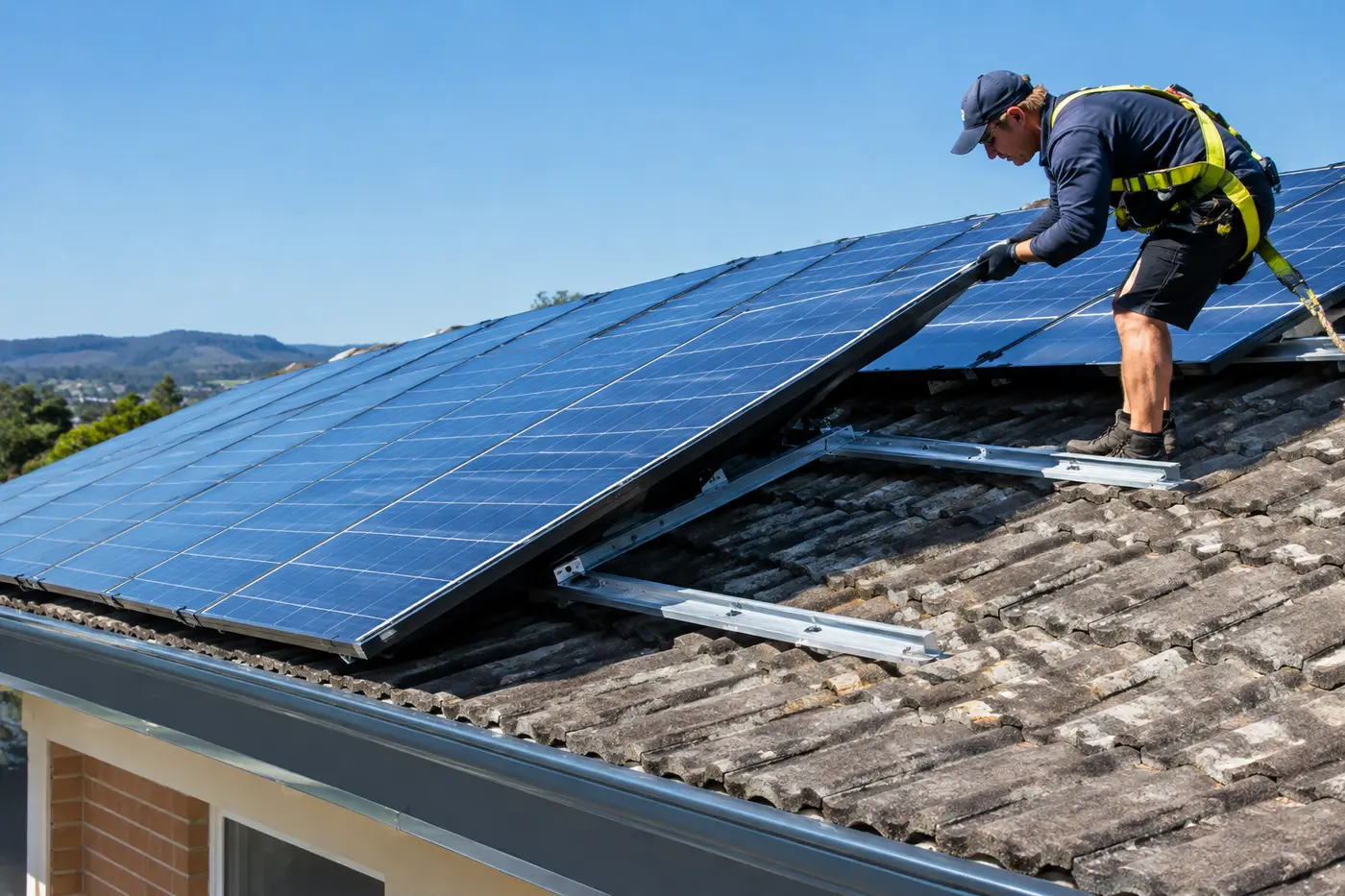
Disconnecting, removing and reinstalling panels is work for a licensed electrician or solar installer. A roofer should not be unplugging your array, and you should be wary of anyone who offers to do it as a side job. The usual order is simple: the panels are isolated and removed, we do the roof work, then they go back on and the system is checked before it is switched back on.
If you still have the details of the company that installed your system, that is a good place to start. They know the setup and the mounting system, and some will do removal and reinstatement for roof work.
On tile roofs, the brackets are usually where the trouble is
Most solar on tile roofs is held down by brackets that hook under the tiles and fix to the rafters below. To make the bracket fit, the tile above it is often ground or notched on the underside. Done well, the tile still sits flat and sheds water. Done in a hurry, the tile sits slightly proud, and water that should run over it gets blown or wicked underneath.
The other thing we see a lot is cracked tiles around the array. Installers have to walk the roof to fit the rails, and concrete and terracotta tiles do not always forgive a heavy step in the wrong place. A crack can sit there for years before it lets water through. Our post on what cracked tiles mean and how they get fixed goes into the causes in more detail.
When the panels are off, we can check every bracket, replace cracked tiles, and make sure the ground tiles are sitting the way they should before the coating goes on.
On metal roofs, look at the screws and the swarf
On a Colorbond or Zincalume roof, the mounting feet are screwed straight through the sheet. Each one is a hole in your roof that relies on a seal to stay dry. Most hold up fine. Some were overtightened, some had the seal pinched, and some were put through the pan of the sheet (the flat channel where the water runs) instead of the high rib.
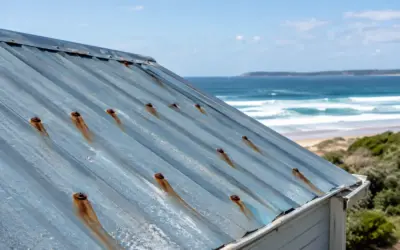
Swarf is the other one. It is the tiny curls of metal left behind when installers drill or cut. Left on the roof, those bits rust and leave orange spots that can stain and eat into the coating around them. Near the coast, salt air speeds that up. If you are in Culburra Beach, Shoalhaven Heads or anywhere with a sea breeze, our piece on salt air and coastal roof corrosion explains why that matters more on your roof than one inland.
If the solar is not on yet, sort the roof first
If you are thinking about solar and the roof is getting tired, do the roof work first. Panels are a long term fixture. Putting them on a roof that will need restoring or replacing in a few years means paying to have them removed and reinstalled when that time comes.
A roof that has been cleaned, repaired, repointed and coated before the panels go on gives the installer a sound base to work on, and gives you one less job to coordinate later. It is also a good moment to get any cracked tiles or tired ridge capping sorted while the whole roof is easy to reach.
A leak that started after the solar went on
If water started coming through a ceiling not long after your panels were installed, the install is the first place to look. The usual causes are the ones above: a cracked tile, a bracket lifting a tile, a badly sealed screw through a metal sheet, or the point where the cabling enters the roof.
Talk to your solar installer first, because their workmanship may be covered. If they are slow to respond or you want an independent look, we can inspect the roof, tell you in plain English what we found and where, and put it in writing so you have something to take back to them.
If your roof is due for work and the panels are part of the picture, our roof restoration service for Nowra homes starts with a proper look at the whole roof, including what we can see around and under the array. Ryan Bruce leads the team, we have more than 10 years of roofing experience behind the work, and we are fully licensed and insured. Get in touch for a free written quote that spells out exactly what happens with your panels.
Common questions about solar panels and roof work
Can you restore a roof with solar panels on it?
Yes. The exposed parts of the roof can be cleaned, repaired and coated with the panels left in place. The section under the array will not be treated, though, so it comes down to whether that part of the roof is in good enough condition to leave alone.
Do solar panels have to come off to replace a roof?
Yes. The new roof has to go on underneath the mounting system, so the panels and rails must be removed first and reinstalled afterwards. That needs to be planned into the job from the start.
Who removes solar panels for roof repairs?
A licensed electrician or solar installer. Panels produce power whenever there is daylight, so disconnecting and reconnecting them is electrical work, not roofing work. The company that installed your system is often the easiest place to start.
Can solar panels cause a roof to leak?
The panels themselves do not, but the installation can. Cracked tiles from foot traffic, brackets that stop tiles sitting flat, and poorly sealed screws through metal sheets are the causes we see most. Debris trapped under the panels can also hold water against the roof.
Should I fix my roof before getting solar?
If the roof is likely to need restoring or replacing in the next few years, yes. Doing it first saves paying to have the panels taken off and put back later, and gives the installer a sound roof to fix to.
Is it safe to pressure clean a roof around solar panels?
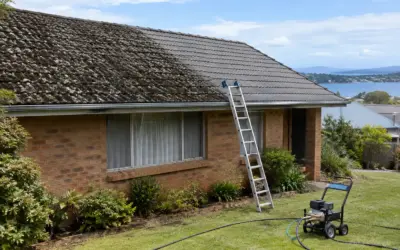
It can be done, but it needs care. The spray should be kept off the panels and their wiring, and nobody should be standing or kneeling on the panels to reach a spot. Panels that are being left in place are also masked before any coating goes on, so overspray does not end up on the glass.