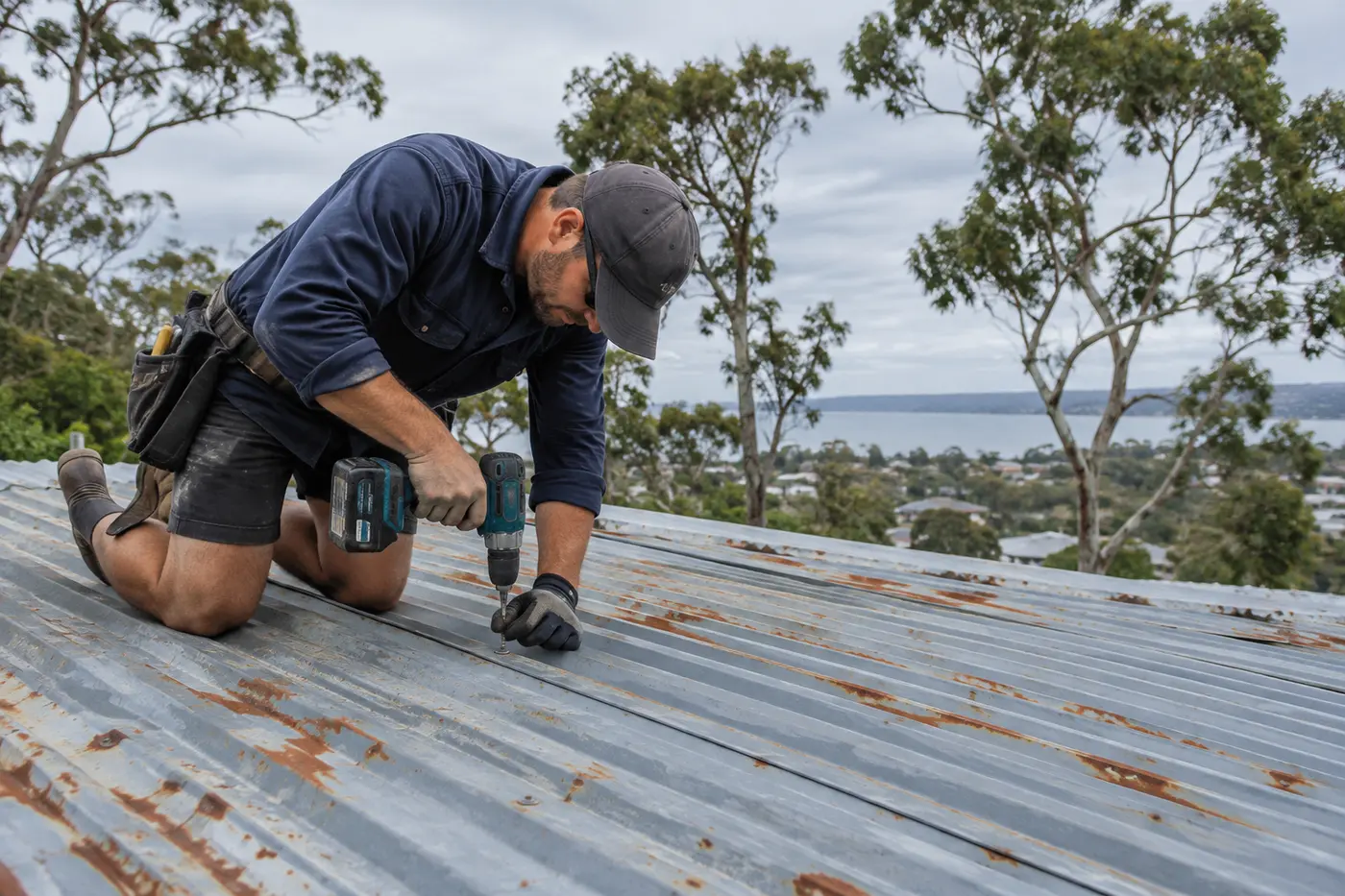
A customer in North Nowra rang us after a big southerly. Water was dripping onto the laundry floor, and the first quote they had been given was for a whole new roof. Their question was simple: can a metal roof be repaired, or is replacement the only real answer? In their case it was three tired screws and a lifted flashing. The rest of the roof had years left in it.
That is not always how it goes. Sometimes the honest answer is that patching is throwing good money after bad. This post walks through how we tell the difference on Shoalhaven roofs, what a proper repair looks like, and the point where we stop recommending repairs.
The short answer: most metal roofs can be repaired
Corrugated iron, Colorbond and Zincalume roofs are made of individual sheets held down with screws and sealed at the edges with flashings. That design is good news for repairs. A damaged section can usually be fixed or swapped out without touching the rest of the roof.
Most of the faults we find fall into a short list:
- Roof screws with perished rubber washers, or screws that have backed out
- Flashings that have lifted, cracked their sealant or come loose at a wall
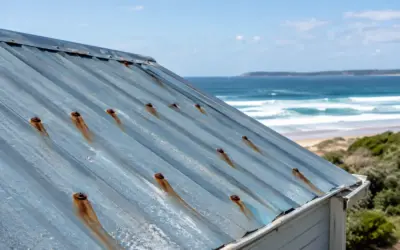
- Isolated rust holes, often near gutters, laps or under old satellite dish mounts
- Sheets dented or pierced by a falling branch
- Rust spots from metal filings left behind by a previous tradesperson
Every one of those can be repaired. Whether it should be depends on how much of the roof is affected and what condition the rest of it is in.
What a real repair involves (and what a bodge looks like)
The most common failed repair we see is a blob of silicone. Someone spots a leak, squeezes a tube of sealant over the screw or hole, and the problem goes away for a season. Then the sealant shrinks in the sun, lets go, and the water comes back. Often it now runs somewhere new, because the silicone has dammed the natural flow along the sheet.
Proper repairs replace the failed part rather than covering it up.
Screws and washers
If a screw has a cracked or perished washer, we take it out and fit a new one of the right type and length. If the hole has been stretched by years of movement, we use a slightly larger screw so it grips. On older roofs the problem is often not one screw but a whole run of them, so we check the full line rather than just the one above the stain.
Rust holes and damaged sheets
A small rust hole on an otherwise sound sheet can sometimes be patched with matching metal and the correct sealant. Once rust has spread along a sheet, or the hole sits in the pan where water runs, we would rather replace the whole sheet. A patch in the pan is fighting the water every time it rains. Replacing a single length of roofing is a routine job, and on Colorbond we match the profile and colour as closely as the current range allows.
Flashings
Flashings are the folded metal strips that seal the joins: where the roof meets a wall, around a chimney or vent, and along the ridge. When they lift or their fixings fail, water tracks straight in. Some can be refixed and resealed. Others are too far gone and need to be remade. Our post on tracking down where a metal roof leak actually starts goes further into this, because the leak and the ceiling stain are rarely in the same place.
Why rust spreads faster on some Shoalhaven roofs
Location matters here. A roof in Culburra Beach or Shoalhaven Heads deals with salt spray that a roof in Cambewarra Village mostly does not. Salt settles in places the rain does not wash clean, such as under eaves and on the sheltered side of a roof, and those areas corrode first.
Two other causes catch people out. The first is mixing metals: a copper pipe, lead flashing or brass fitting in contact with Zincalume or Colorbond can make the roof corrode around it. The second is swarf, the tiny metal filings left when someone cuts or drills on the roof and does not sweep up. Each filing rusts and leaves a brown spot that can eat into the coating. If you have ever seen a peppering of orange dots around an air conditioner or solar install, that is usually why.
We explain the salt side of this in our guide to salt air and corrosion on coastal roofs. The short version: rust caught while it is still on the surface stays in repair territory.
When we tell people to stop repairing
Repairs make sense while the problems are isolated. They stop making sense when the roof is failing everywhere at once. These are the signs that push us towards recommending replacement instead:
- Rust that has gone through the sheets in several areas, not just one
- Sheets that flex or crumble when pressed near the screws
- Leaks that keep turning up in new spots after each repair
- Rusted or rotten battens underneath, so new screws have nothing solid to bite into
- A roof pitch too low for the sheet profile, so water backs up at every lap
If you are paying for a repair visit every winter, add up what those visits cost compared with replacing the worst sections, or the whole roof. Sometimes replacing one side of the roof and repairing the other is the sensible middle ground. We will price it more than one way if that helps you decide.
Our approach is the same on every job: look at the roof properly, explain what we found in plain English, price the work in writing, and tell you when the cheaper option is the right one. If you would like us to look at yours, our metal roof repair service covers screws, flashings, sheet replacement and rust across Nowra and the surrounding suburbs.
What you can safely check from the ground
You do not need to climb up to learn a lot. A walk around the house with a pair of binoculars on a clear day will show you most of what matters. Look for brown streaks running down from screws, orange staining along the gutter line, flashings that sit proud of the wall, and any sheets that look dented or out of line with their neighbours.
Inside, check the ceiling near external walls and around any roof penetrations such as exhaust fans or flues. A fresh stain after rain tells you the problem is active.
Metal roofs are slippery when wet, and many older sheets will not take a person’s weight between the battens. Please leave the walking to someone with the right equipment and insurance.
Get a straight answer on your roof
Roof Restoration Nowra is led by Ryan Bruce, with more than 10 years of roofing experience behind the work, and we are fully licensed and insured. If you are unsure whether your roof needs a repair or something bigger, we will come out, show you what we find and give you a free written quote. Start with our metal roof repairs page to see what the work covers, then get in touch.
Common questions about repairing metal roofs
Can you patch a hole in a metal roof?
Yes, if the hole is small and the metal around it is still sound. A patch should be matching metal, properly sealed and fixed, not just a layer of sealant. If the hole is in the pan where water runs, or the rust around it is spreading, replacing the sheet is the better repair.
Can you repair just a section of a metal roof?
Usually, yes. Because metal roofs are laid in individual sheets, we can replace one or several lengths without disturbing the rest. On Colorbond the new sheets may look slightly brighter than the weathered ones around them at first.
Is it cheaper to repair or replace a metal roof?
A targeted repair almost always costs less upfront. The question is whether it will last. If the roof has widespread rust or keeps leaking in new places, ongoing repairs can end up costing more than replacing the worst sections or the whole roof. A written quote for both options makes that comparison easy.
Is Flex Seal or silicone good for metal roof leaks?
Spray and tube sealants can stop a drip for a short time, but they are not a lasting fix on a metal roof. Sun and the constant expansion and contraction of the sheets break them down, and they can trap water against the metal. Replacing the failed screw, flashing or sheet is what actually solves the leak.
What is the biggest problem with metal roofs?
On the homes we see around Nowra, it is fasteners and flashings rather than the sheets themselves. Rubber washers perish and screws loosen as the roof moves with the heat. On coastal properties, corrosion in sheltered spots where salt builds up comes a close second.
Can a rusty metal roof be saved?
If the rust is on the surface, it can usually be treated and the roof kept in service. Once it has eaten through the metal across large areas, or the battens underneath are rusting too, replacement is the more reliable path. An inspection is the only way to tell which side of that line your roof is on.