
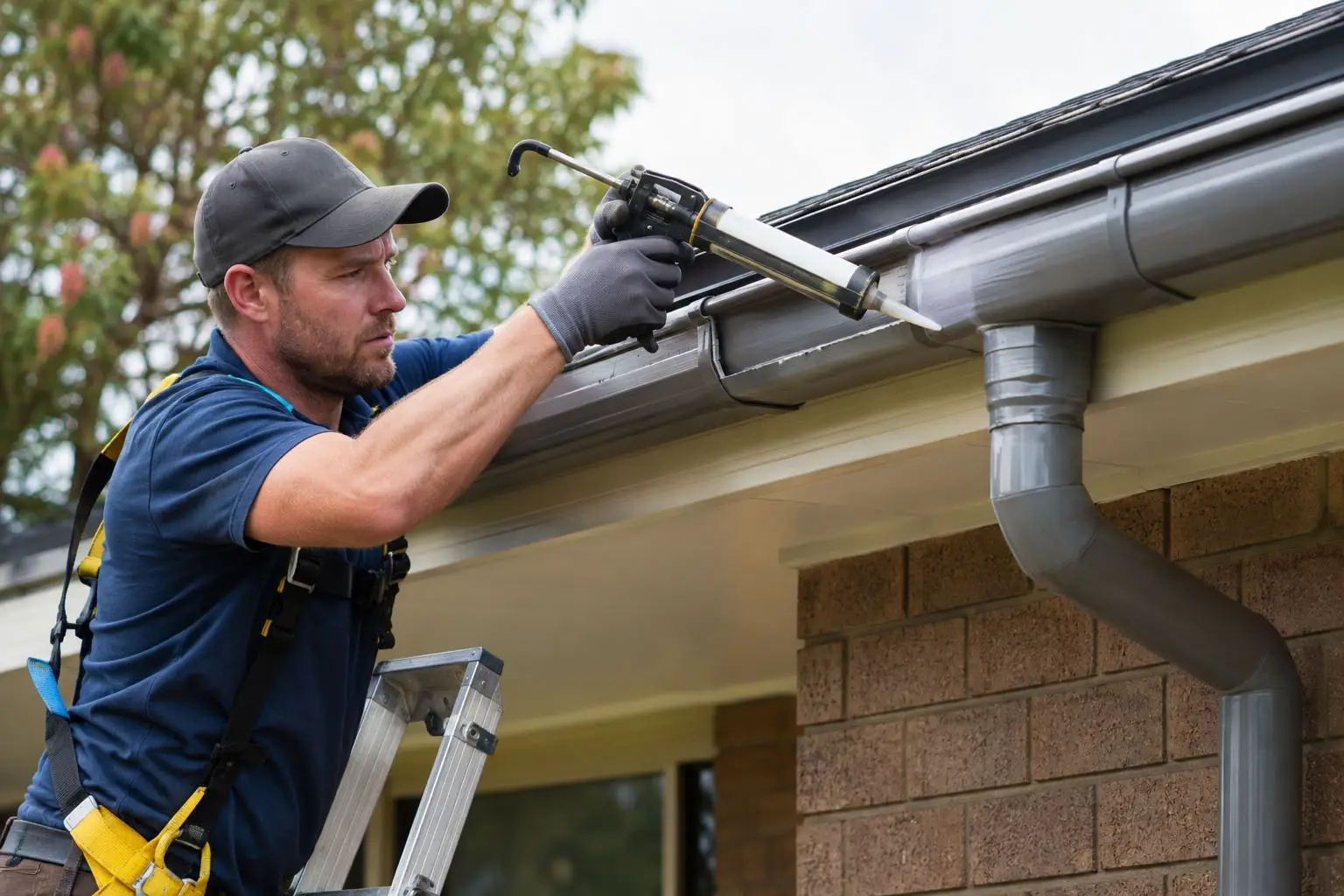
When Is It Time to Replace Your Gutters in Nowra?
Gutters are easy to overlook until something goes wrong.
A functioning gutter system collects rainwater from the roof and directs it towards the downpipes and away from the building. When sections become rusted, damaged, poorly aligned or unable to drain effectively, water can overflow or escape in places it should not.
For properties around Nowra, this becomes particularly noticeable during periods of heavy rain.
Not every gutter problem means the entire system needs replacing. A small isolated issue may sometimes be repairable. However, where deterioration is widespread or multiple sections are failing, gutter replacement can provide a more practical long-term solution than continually patching an ageing system.
Learn more about our gutter replacement services in Nowra.
Why Gutters Are Important
The gutter system forms part of the overall roof drainage system.
Its job is to collect water running from the roof and direct it towards suitable outlets and downpipes.
Effective drainage can help reduce uncontrolled water around:
- Fascias
- Eaves
- External walls
- Windows and doors
- Paths
- Landscaping
- Areas close to the building
Gutters cannot prevent every moisture problem around a property, but poorly functioning drainage can contribute to unnecessary water exposure.
Common Gutter Problems
Gutter systems can deteriorate for a number of reasons.
Common problems include:
- Rust and corrosion
- Leaking joints
- Sagging sections
- Loose brackets
- Poor alignment
- Damaged gutter profiles
- Overflow during rainfall
- Deteriorated outlets
- Downpipe connection problems
- Debris accumulation
- Previous patch repairs
- Water pooling in sections of gutter
The cause matters.
For example, an overflowing gutter may be damaged, but it could also be affected by a blocked outlet or inadequate drainage capacity.
Signs Your Gutters May Need Attention
Some warning signs are obvious during rainfall.
Others can be noticed when conditions are dry.
Look for:
- Water overflowing over the gutter edge
- Visible rust
- Holes or splits
- Sagging sections
- Gutters pulling away from the fascia
- Water dripping from joints
- Standing water remaining after rain
- Staining below gutters
- Deteriorated brackets
- Damaged outlets
- Repeated patch repairs
If several of these issues are occurring across the system, replacement may be worth considering.
Repair or Replace?
Not every damaged gutter needs complete replacement.
A Localised Repair May Be Suitable When:
- The problem affects one contained area
- Most of the gutter remains in good condition
- A bracket or connection has failed
- The surrounding material remains serviceable
- The defect can be corrected without creating compatibility problems
Replacement May Make More Sense When:
- Corrosion is widespread
- Several sections are leaking
- Gutters are extensively sagging
- Multiple joints have failed
- The existing system has numerous patches
- The gutter profile is badly damaged
- Problems keep returning in different areas
A useful assessment should consider the condition of the whole gutter run, not just the most obvious leak.
Rust and Corrosion
Metal guttering can develop corrosion as protective finishes deteriorate.
Early signs may include:
- Surface rust
- Discolouration
- Corrosion around joints
- Rust near outlets
- Small holes
The extent of corrosion determines the appropriate response.
A small isolated area and a gutter system with corrosion across multiple sections are very different situations.
Once the metal has deteriorated extensively, adding more sealant or patches may provide diminishing value.
Sagging Gutters
Gutters should maintain an appropriate fall towards their outlets.
Sagging may develop because of:
- Loose brackets
- Damaged supports
- Debris weight
- Age
- Previous installation
- Movement
- Deteriorated components
A low section can allow water to remain in the gutter instead of draining correctly.
Persistent standing water can also make existing deterioration more obvious.
Overflowing Gutters
Water overflowing during heavy rain does not automatically mean the gutter itself needs replacing.
Possible causes include:
- Blocked outlets
- Debris
- Downpipe restrictions
- Incorrect fall
- Sagging sections
- Insufficient drainage for the particular roof
- Damaged components
The cause should be identified before deciding on the solution.
Simply installing new guttering without considering the outlets and downpipes may leave the underlying drainage problem unresolved.
Gutters and Downpipes Work Together
Gutters are only one part of the drainage system.
Water collected from the roof must then move through the downpipes and into the property’s appropriate stormwater system.
When planning gutter replacement, consideration should be given to:
- Gutter profile
- Outlets
- Downpipe locations
- Existing downpipes
- Roof catchment
- Roof geometry
- Water flow
- Connections
A new gutter cannot perform properly if the rest of the drainage path is unsuitable or obstructed.
Gutter Problems Around Roof Valleys
Roof valleys can direct significant volumes of water towards relatively concentrated sections of gutter.
During heavy rainfall, these areas may experience greater water flow than straight sections of roof.
The relationship between the:
- Valley
- Gutter
- Outlet
- Downpipe
should therefore be considered together where overflowing repeatedly occurs in the same location.
Gutter Damage and Fascias
Gutters are normally supported along the roof edge, often in association with fascia components.
Where a gutter has been leaking or overflowing for an extended period, the surrounding areas may also deserve assessment.
Possible signs include:
- Staining
- Peeling finishes
- Deteriorated timber
- Corroded components
- Loose brackets
Replacing guttering without checking the substrate it attaches to can create problems if the supporting area has already deteriorated.
What Happens During Gutter Replacement?
The exact process varies according to the building and gutter system.
A typical project may involve:
- Assessing the existing gutters and drainage
- Measuring the required gutter runs
- Identifying outlets and downpipe connections
- Removing agreed sections of existing gutter
- Checking accessible supporting areas
- Installing brackets and new guttering
- Connecting suitable outlets and downpipes
- Checking alignment and fall
- Completing joins, corners and end details
- Cleaning the work area and completing a final check
The written quote should explain exactly which parts of the drainage system are being replaced.
Choosing the Right Gutter System
Different properties may require different gutter profiles and drainage arrangements.
Selection can depend on:
- Roof size
- Roof shape
- Existing system
- Building design
- Rainwater flow
- Outlet configuration
- Architectural appearance
- Compatible materials
The right choice should be based on the property rather than simply selecting a profile because it looks good.
Material Compatibility Matters
Different metals can interact when they are installed or drained in ways that create incompatibility.
This can be relevant to:
- Roof sheets
- Gutters
- Flashings
- Fixings
- Downpipes
- Other metal components
The replacement system should therefore be compatible with the existing roofing and adjoining materials.
This is particularly important on properties where different roofing products have been added during previous renovations.
Gutter Replacement and Metal Roofing
If a metal roof is also approaching replacement, it can be worthwhile considering the guttering at the same time.
That does not mean gutters automatically need replacing whenever a new roof is installed.
However, coordinating the two projects can help ensure:
- Roof edges integrate correctly
- Flashing details are considered
- Materials are compatible
- Drainage is planned as a complete system
The existing condition should determine what is retained and what is replaced.
Gutter Replacement and Tile Roofing
Tile roofs have their own roof-edge and drainage details.
Replacement work should account for:
- Tile overhang
- Fascia position
- Roof valleys
- Gutter profile
- Outlet locations
The new gutter needs to work with the existing roof rather than being considered as an isolated component.
What Is Gutter Guard?
Gutter guard is designed to reduce the amount of larger debris entering the gutter system.
It can be useful on properties affected by:
- Leaves
- Twigs
- Nearby trees
- Regular organic debris
However, gutter guard does not make gutters maintenance-free.
Fine material can still accumulate, and gutters, outlets and roof areas may still require inspection.
You can learn more about gutter guard in Nowra.
Is Gutter Guard Right for Every Home?
Not necessarily.
Its usefulness depends on:
- Surrounding vegetation
- Roof type
- Gutter design
- Debris levels
- Access
- Maintenance expectations
A home with significant tree coverage may benefit differently from a property with very little surrounding vegetation.
The system should suit the particular roof and gutter arrangement.
Should Gutters Be Cleaned on a Fixed Schedule?
There is no universal cleaning interval that suits every property.
How quickly debris accumulates depends on:
- Nearby trees
- Wind
- Roof design
- Gutter profile
- Seasonal conditions
- Surrounding environment
Some properties may need more frequent attention than others.
Rather than relying solely on a fixed timetable, homeowners can watch for obvious debris build-up, overflowing or reduced drainage.
Can You Work on Gutters Yourself?
Tasks involving roof edges and ladders carry fall risks.
Even gutter cleaning can become hazardous where:
- The building is high
- Ground conditions are uneven
- Roof access is required
- Gutters are difficult to reach
- The roofing is fragile
- Electrical hazards are nearby
Homeowners should avoid taking unnecessary risks to inspect or repair elevated guttering.
Ground-level observation during rainfall can often provide useful information without climbing onto the property.
What to Look for During Heavy Rain
Rain can reveal gutter problems that are difficult to see in dry weather.
From a safe location, look for:
- Overflowing sections
- Water escaping from joints
- Dripping behind gutters
- Poor drainage towards outlets
- Downpipes backing up
- Water concentrated in unexpected areas
You can tell your roofer exactly where and when the problem occurs.
This can make diagnosis easier.
Does Gutter Replacement Prevent All Water Problems?
No.
Gutters are only one part of a property’s water-management system.
Moisture problems can also involve:
- Roof leaks
- Flashings
- Valleys
- Downpipes
- Stormwater drainage
- Ground levels
- Plumbing
- Other building components
If water is appearing inside the house, the source should be properly investigated rather than assuming the gutter is responsible.
How Much Does Gutter Replacement Cost in Nowra?
There is no single price that applies to every home.
Costs may depend on:
- Length of guttering
- Selected profile
- Material
- Building height
- Access
- Number of corners
- Outlets
- Downpipe connections
- Existing gutter removal
- Fascia condition
- Roof design
- Safety requirements
A straight single-storey gutter run and a complex multi-level home can involve very different amounts of labour and material.
A written site-specific quotation is therefore more useful than generic metre-rate estimates.
What Should a Gutter Replacement Quote Include?
Before comparing prices, check what each quote actually covers.
Useful details include:
- Gutter material and profile
- Sections being removed
- Sections being replaced
- Brackets and fixings
- Corners and joins
- Outlets
- Downpipe connections
- Disposal of old materials
- Access requirements
- Exclusions
- Treatment of unexpected deterioration
- Relevant warranty information
The cheapest headline price may not represent the same scope as another quote.
Protecting Your New Gutters
Once new gutters are installed, homeowners can help by:
- Watching for debris accumulation
- Keeping nearby vegetation managed
- Checking drainage during heavy rain
- Looking for unusual overflow
- Monitoring outlets and downpipes
- Avoiding damage from ladders
- Arranging assessment if the gutter moves or begins leaking
Maintenance should be based on the conditions around the individual property.
Choosing a Gutter Replacement Contractor
Before proceeding, check that the contractor:
- Has suitable experience with roof drainage
- Holds appropriate NSW licences for the work being performed
- Carries suitable insurance
- Provides a written quote
- Specifies the proposed gutter system
- Explains which components will remain
- Considers outlets and downpipes
- Explains how additional damage will be handled
- Provides applicable warranty information
A good gutter replacement should address how water moves through the whole system, not simply replace the visible metal along the roof edge.
When Should You Replace Your Gutters?
A small gutter defect does not necessarily require replacing everything.
However, where corrosion, sagging, leaking joints or repeated failures affect several parts of the system, replacement may provide a cleaner and more reliable solution than continuing to patch deteriorated sections.
At Roof Restoration Nowra, we provide gutter replacement and related roofing services based on the condition and requirements of the property.
If your gutters are rusted, leaking, sagging or overflowing, contact Roof Restoration Nowra for a free quote.