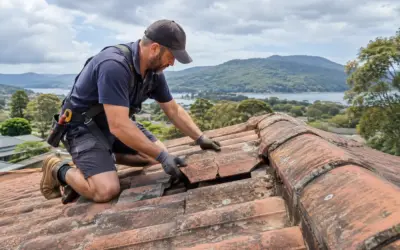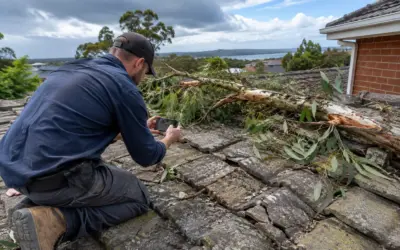
Why Roof Inspections Matter for Nowra Homes
A roof can develop problems well before anything becomes obvious from ground level.
Cracked tiles, deteriorated flashing, corrosion, loose fixings and early water entry can all begin as relatively small defects. If they are identified early, the required work may be much more contained than if the problem is left until a major leak develops.
For homes around Nowra, regular attention can be particularly worthwhile because roofing is exposed to sun, wind, rain, storms and coastal conditions throughout the year.
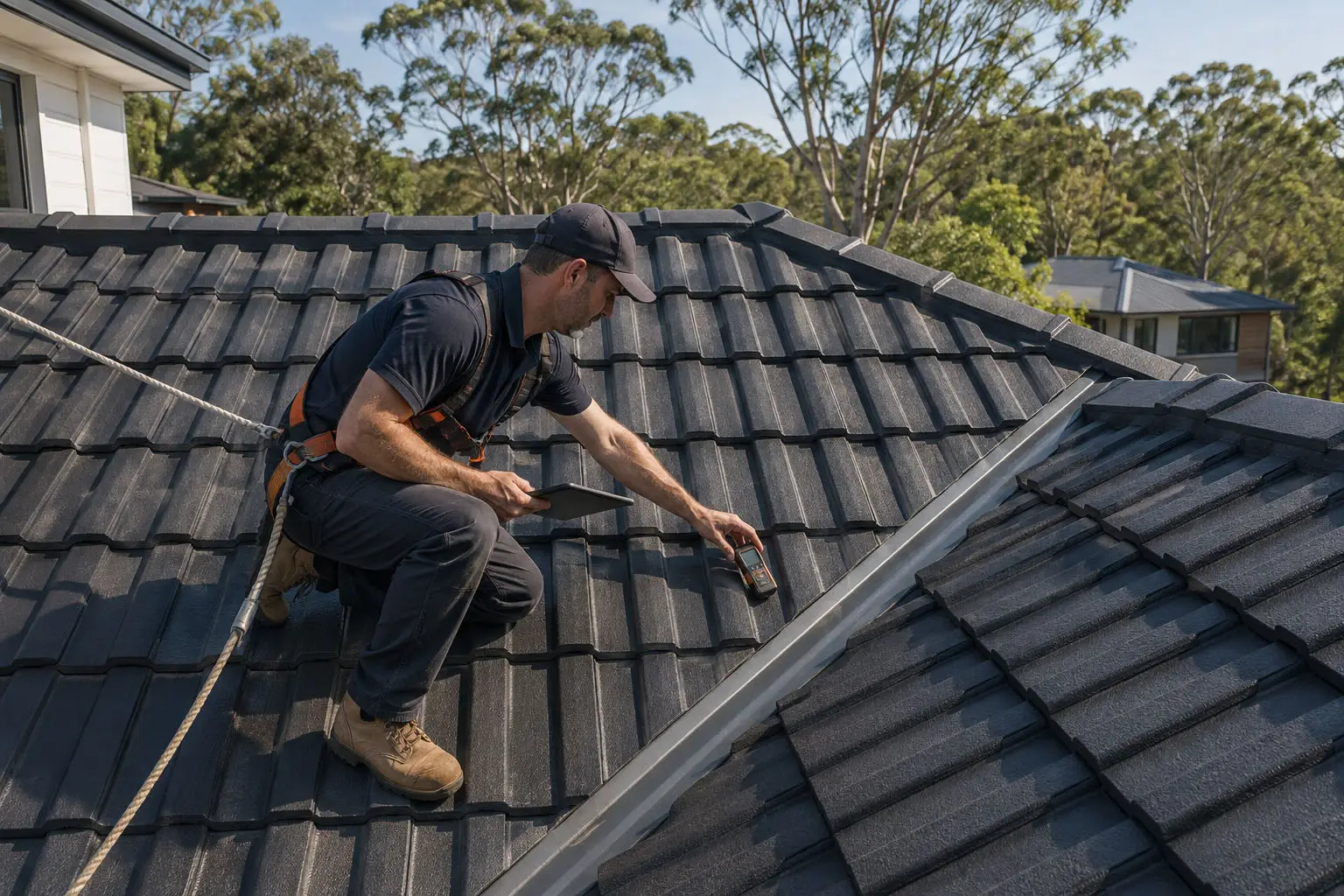
A professional roof inspection is designed to assess the visible condition of the roofing system, identify signs of deterioration and help determine whether maintenance, repair, restoration or further investigation is required.
Learn more about our roof inspection services in Nowra.
What Does a Roof Inspection Cover?
The exact inspection will depend on the property, roofing material and reason for the assessment.
For a typical residential roof, areas checked may include:
- Roof tiles or metal sheets
- Ridge capping and pointing
- Flashings
- Valleys
- Roof penetrations
- Fixings and fasteners
- Sealants
- Visible corrosion
- Signs of damaged roofing
- Gutters and drainage interfaces
- Evidence of water entry
- Previous repair areas
- Accessible roof components
The purpose is not simply to find something wrong.
A useful inspection should distinguish between normal ageing, isolated defects and broader roofing problems.
Tile Roof Inspections
Tile roofing can develop localised defects over time.
An inspection may look for:
- Cracked tiles
- Broken tiles
- Slipped or displaced tiles
- Deteriorated ridge pointing
- Loose ridge capping
- Valley problems
- Flashing deterioration
- Moss or lichen growth
- Signs of water entry
A few damaged tiles do not automatically mean the roof needs restoration or replacement.
The wider condition of the roof should determine the appropriate response.
Metal Roof Inspections
Metal roofing requires a different set of checks.
Potential issues include:
- Surface rust
- Corrosion
- Loose screws
- Deteriorated washers
- Coating damage
- Damaged sheets
- Loose roofing sections
- Flashing problems
- Failed sealants
- Leaks around penetrations
Coastal exposure can make corrosion particularly important to monitor.
Minor surface deterioration and advanced corrosion are very different conditions, so the extent of the damage matters.
Flashings and Roof Junctions
Some leaks originate from roof junctions rather than the main roofing material.
Flashings are commonly used around:
- Walls
- Roof penetrations
- Changes in roof level
- Valleys
- Vents
- Other junctions
These areas can deteriorate due to age, movement, corrosion or failed previous repairs.
A roof may therefore have serviceable tiles or sheets while still developing a leak through damaged flashing.
Ridge Capping and Pointing
Ridge capping is an important part of tiled roofing.
An inspection may identify:
- Cracked pointing
- Crumbling mortar
- Loose ridge tiles
- Separation
- Visible gaps
- Previous repair deterioration
Repointing is not automatically required simply because a roof reaches a particular age.
The condition of the ridge capping should determine whether work is necessary.
Roof Valleys
Valleys carry concentrated rainfall from adjoining roof slopes.
They should be checked for issues such as:
- Corrosion
- Damage
- Debris accumulation
- Movement of surrounding tiles
- Previous patch repairs
- Water tracking beneath adjacent roofing
Because valleys handle significant water flow, deterioration can become a source of leaks if left unresolved.
Roof Penetrations
Roof penetrations deserve particular attention because every opening through a roof creates additional weatherproofing details.
These can include:
- Plumbing vents
- Exhaust vents
- Skylights
- Solar equipment
- Antennas
- Other rooftop services
An inspection may look at both the penetration itself and the surrounding:
- Flashing
- Tiles or sheets
- Fixings
- Sealants
Water appearing near a penetration does not necessarily mean the unit itself has failed.
Signs You Should Arrange a Roof Inspection
You do not have to wait for water to start dripping from the ceiling.
An inspection may be worthwhile if you notice:
- Water stains on ceilings
- Damp patches
- Cracked or missing tiles
- Visible roof movement
- Rust or corrosion
- Loose roofing materials
- Deteriorated ridge capping
- Problems around flashings
- Debris collecting in valleys
- New leaks after heavy rain
- Visible storm damage
- Repeated repairs in the same area
A new symptom is often more useful than simply relying on the age of the roof.
After Heavy Rain or Strong Winds
Severe weather can expose roofing weaknesses that were previously unnoticed.
Possible issues may include:
- Broken tiles
- Displaced tiles
- Loose metal sheets
- Damaged flashing
- Ridge capping movement
- Impact damage
- Water entry
Not every roof needs inspection after every storm.
However, if you notice a new leak or visible damage after significant weather, arranging an assessment can help establish the extent of the problem.
Before Buying a Property
The roof is one of the more expensive parts of a property to repair or replace.
A roofing assessment may therefore be useful when there are concerns about:
- An older roof
- Previous repairs
- Visible deterioration
- Corrosion
- Leaks
- Roofing alterations
A roof inspection is not necessarily the same as a formal building inspection, and the scope should be clear before relying on it as part of a property purchase.
Before Roof Restoration
Inspection should come before restoration.
A roof needs to be assessed to determine whether it is actually suitable for:
- Cleaning
- Repairs
- Repointing
- Surface preparation
- Painting
- Protective coatings
Coating a roof that has major underlying defects may improve its appearance without solving the actual problem.
If the roof is broadly weathered but still suitable to retain, you can read more about roof restoration in Nowra.
Before Roof Replacement
Inspection is also important before deciding to replace an entire roof.
Replacement may be appropriate where there is:
- Widespread material failure
- Severe corrosion
- Extensive tile deterioration
- Multiple recurring leaks
- Significant structural concerns
- Extensive previous patching
However, an older roof should not automatically be replaced simply because of its age.
If the damage is contained, repair may still be the more sensible option.
Roof Inspection vs Roof Leak Investigation
These are related but not always identical.
A general roof inspection considers the broader condition of the roofing system.
A leak investigation is more focused on identifying the likely source of water entry.
Because water can travel before becoming visible inside the home, leak diagnosis may require attention to:
- Flashings
- Roof penetrations
- Valleys
- Tile laps
- Sheet joins
- Fixings
- Previous repairs
The stain on the ceiling may not be directly below the defect.
Why Early Detection Can Help
Finding a roofing defect before significant water entry develops can sometimes limit the amount of work required.
Leaks may eventually affect:
- Ceiling linings
- Insulation
- Timber
- Internal walls
- Paint finishes
- Other moisture-sensitive materials
This does not mean every minor roof defect will turn into major damage.
It simply means there is usually an advantage in investigating a clear problem before it becomes more extensive.
Can a Roof Inspection Extend Roof Life?
An inspection itself does not extend the life of a roof.
Its value comes from identifying issues that may benefit from maintenance or repair.
For example, finding:
- A failed flashing
- A cracked tile
- A loose fixing
- Early corrosion
- Deteriorated pointing
may allow that particular problem to be addressed before it affects additional components.
There is no responsible way to promise that an inspection will automatically add a certain number of years to a roof.
How Often Should a Roof Be Inspected?
There is no single schedule that suits every property.
The appropriate timing can depend on:
- Roof age
- Roofing material
- Previous problems
- Surrounding vegetation
- Coastal exposure
- Storm history
- Visible deterioration
- Recent roofing work
A relatively new roof with no symptoms may require less attention than an older roof that has already developed several repair issues.
Condition-based inspection makes more sense than applying one fixed interval to every home.
Can You Inspect the Roof Yourself?
Homeowners can safely keep an eye on many things from ground level.
You may be able to notice:
- Missing tiles
- Visible rust
- Loose roofing
- Sagging gutters
- Damaged ridge capping
- Tree damage
- Changes after storms
Inside the home, look for:
- Ceiling stains
- Dampness
- Dripping
- Peeling paint
- New moisture marks
Avoid climbing onto the roof yourself.
Roof surfaces can be slippery, fragile or difficult to access safely.
What Information Should You Give the Roofer?
You do not need to know exactly what is wrong before arranging an inspection.
Useful information includes:
- Property address or suburb
- Whether the roof is tile or metal, if known
- Approximate roof age if known
- Location of any leaks
- When the problem appears
- Recent storms or strong weather
- Previous roof repairs
- Solar panels or other rooftop equipment
- Access issues
- Photos taken safely from the ground or inside
Even basic information can help make the inspection more focused.
What Happens After the Inspection?
The next step should depend on what is actually found.
Possible outcomes may include:
- No immediate work required
- Maintenance
- A targeted repair
- Flashing work
- Ridge capping or repointing
- Valley replacement
- Roof restoration
- Roof replacement
- Further specialist assessment
A useful roofing assessment should explain why a particular scope is being recommended.
Roof Inspection Costs and Quotes
The cost and scope of an inspection can vary.
Factors may include:
- Property size
- Roof height
- Roof pitch
- Access
- Roofing material
- Complexity
- Reason for inspection
- Whether additional investigation is required
Where an inspection forms part of quoting for roofing work, the contractor should explain what is included.
Choosing a Roof Inspection Contractor
Before arranging an inspection, check that the contractor:
- Holds appropriate NSW licences
- Carries suitable insurance
- Has experience with the relevant roofing material
- Explains what the inspection covers
- Provides clear recommendations
- Distinguishes between urgent and non-urgent issues
- Explains whether repair, restoration or replacement is appropriate
Be cautious of an inspection that automatically leads to the most expensive possible recommendation.
Know What Your Roof Actually Needs
A roof inspection is useful because it replaces assumptions with a clearer understanding of the roof’s condition.
Sometimes the outcome is a small repair. Other times several defects may make restoration more practical. In more advanced cases, replacement may eventually be required.
The important part is making that decision based on what the roof actually shows, rather than waiting for a major leak or assuming that an older roof automatically needs replacing.
At Roof Restoration Nowra, we inspect tile and metal roofing and provide recommendations based on the condition of the property.
If you have noticed leaks, deterioration, storm damage or simply want your roof assessed, contact Roof Restoration Nowra for a free quote.