
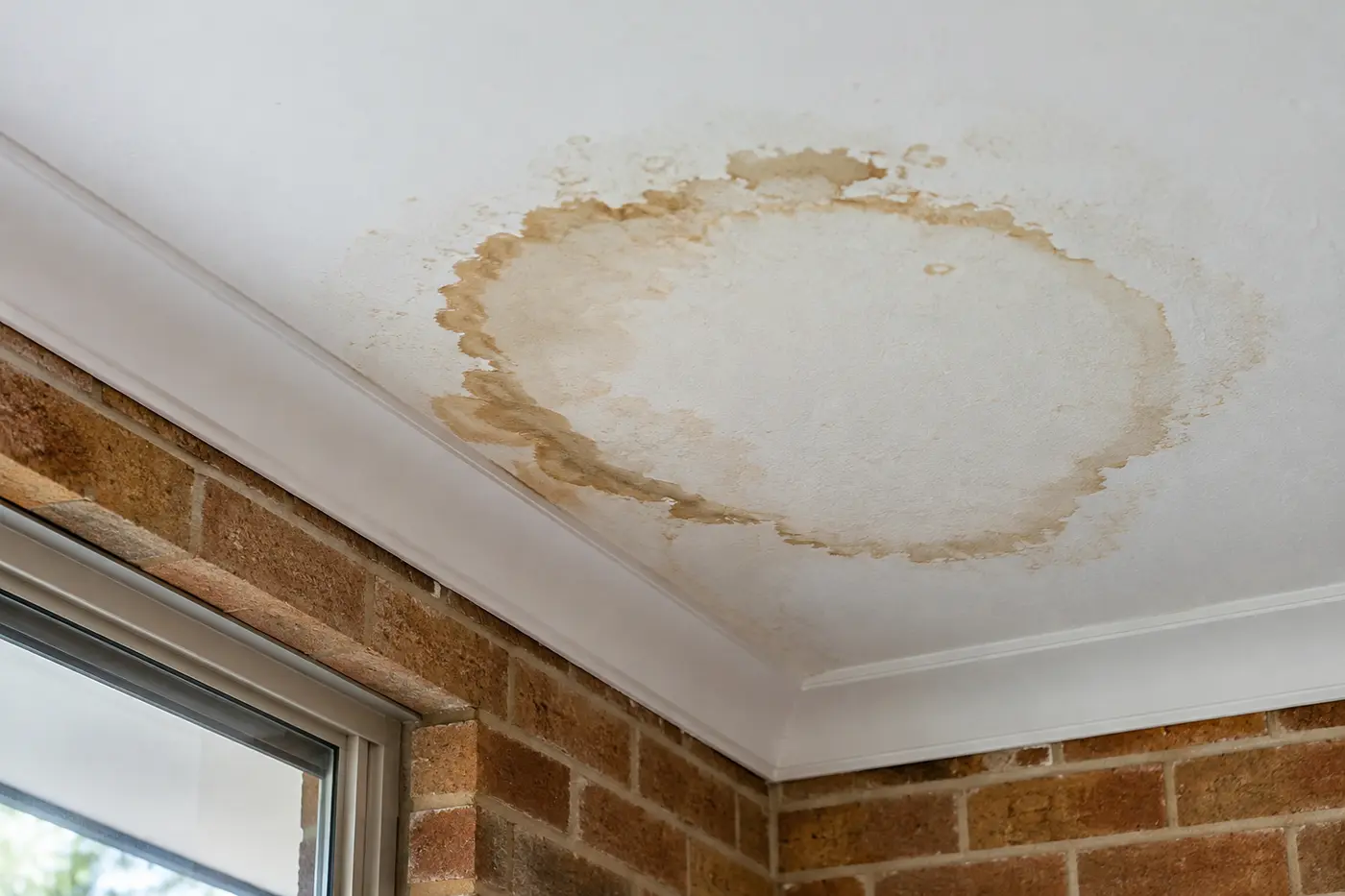
It usually starts the same way. A wet week rolls through the Shoalhaven, and a day or two later someone looks up from the couch and sees it: a brown ring on the ceiling that wasn’t there before. Sometimes it’s the size of a coaster. Sometimes it has spread halfway across the hallway. Either way, a water stain on the ceiling raises the same question for most of the people who call us: is the roof leaking, and how bad is it?
We look at a lot of these around Nowra. Most of the time the roof is to blame, but not every time, and the stain itself gives away more about the cause than people expect. Here is how we read one, what you can safely check yourself, and what to leave alone.
The stain is a clue, so read it before you touch it
A ceiling stain is what’s left when water soaks into plasterboard and then dries. The brown or yellow colour comes from minerals and dust carried through with the water. That tells you water got there. Where it sits, what shape it is and when it showed up tell you where the water came from.
Location. A stain near an outside wall, in a corner, or below where two roof sections meet points us toward the roof edge, a gutter or a valley. A stain in the middle of a room under a bathroom, or right below the hot water system in the roof space, makes us think about plumbing first.
Timing. This is the big one. If the mark appears or grows after rain and stays the same on dry days, it’s almost always a roof or gutter problem. If it grows when the weather is dry, look at pipes, the air conditioner or the bathroom.
Shape. A stain with several darker rings inside it has been wet and dried more than once. That means the leak isn’t new, even if you only just noticed it. A single soft patch with no ring is often fresh.
Not every ceiling stain is a roof leak
We would rather tell you that up front than send a roofer up a ladder for a plumbing job. These are the other causes we come across:
- A slow drip from a water pipe or a hot water system sitting in the roof space
- A blocked or disconnected air conditioner drain line, which can drip for weeks in summer
- A bathroom exhaust fan that vents into the roof cavity instead of outside
- Failed seals around a shower or bath on an upper floor
- Condensation forming on the underside of a metal roof
That last one surprises people. On cold, clear mornings, the underside of a metal roof can get colder than the air in the roof space. Moisture forms on the sheets, then drips onto the ceiling. With no rain at all. Older metal roofs without a foil layer or insulation blanket under the sheeting are the most likely to do it. If you are seeing marks on a metal roofed home after cold nights rather than after storms, mention it when you call. It changes what we look for.
When it is the roof, these are the usual suspects
On tile roofs, the common causes are cracked or slipped tiles, ridge caps where the pointing (the flexible bedding that holds the caps on) has cracked or come away, and rusted or blocked valley irons. On metal roofs it tends to be loose or rusted screws, failed flashings around pipes and skylights, and rust holes in the sheets. On both, gutters and box gutters that overflow in heavy rain can push water back under the roof line and into the ceiling.
If your stain only shows up after a real downpour, our guide to why roofs leak in heavy rain goes through those storm specific causes in more detail.
The leak is rarely right above the stain
This catches out a lot of people who try to find it themselves. Water that gets past a tile or a sheet doesn’t drop straight down. It runs along the sarking (the foil or membrane under the roof), down a rafter, or along the top of a ceiling joist until it finds a low point. Then it soaks through. On a pitched roof, the hole can be well uphill of the mark on your ceiling.
So replacing the tile directly above the stain is often a waste of a weekend. The real entry point is found by following the water marks on the timber back to where they start.
What to do this week, before anyone climbs a ladder
None of this needs you on the roof. Please stay off it, especially when it’s wet. Tiles and metal sheets are slippery, and tiles crack underfoot.
- Trace around the edge of the stain lightly with a pencil and write the date beside it. After the next rain you will know straight away if it has grown.
- Take photos of the stain with the date, and again after each rain.
- If you can get into the roof space safely, take a torch and look above the stain for damp timber, wet insulation or drips. Only step on the joists, never on the ceiling between them.
- Put a bucket or towel under any active drip.
- If water is near a light fitting, a downlight or a ceiling fan, switch off that circuit at the switchboard and call an electrician.
If the ceiling is sagging, bulging or feels soft, keep people and pets out from under it. Wet plasterboard is heavy and it can come down. That’s the point where you call someone the same day rather than waiting to see what the next storm does.
Don’t paint over it until the cause is fixed
It’s tempting to roll a coat of paint over the mark and forget about it. The trouble is that ordinary ceiling paint usually lets the stain bleed back through, and painting before the leak is fixed just hides the evidence while the plaster, insulation and timber keep getting wet.
The right order is: fix the source, let the ceiling dry out completely, replace any board that has gone soft or sagged, then seal the area with a stain blocking primer before painting. If you are thinking about an insurance claim, the photos and dated pencil marks matter too. Our post on whether insurance covers a leaking roof explains why insurers look closely at how long a leak has been going.
What happens when we come and look
We start inside at the stain, follow the trail back through the roof space, then check the likely entry points up on the roof. If the cause turns out to be a pipe or an air conditioner, we tell you that and suggest you call a plumber or an air conditioning technician, rather than selling you roof work you don’t need.
When it is the roof, we explain what we found in plain English and give you a free written quote that sets out what’s included and what isn’t. Ryan Bruce leads the team, with more than 10 years of roofing experience behind the work, and we are fully licensed and insured. You can read more about how we handle leak repairs on tile and metal roofs across Nowra and the Shoalhaven.
Got a new mark on the ceiling, or an old one that keeps getting bigger? Get in touch through our roof repairs page, tell us where the stain is and when it appeared, and we will find the source and price the fix in writing.
Common questions about ceiling water stains
What do you do if you have a water stain on your ceiling?
Mark the edge with a pencil, date it and take a photo, then check it again after the next rain. If it grows after rain, it’s most likely the roof or gutters, so call a roofer. If it grows in dry weather, a plumber is usually the better first call.
Can I just paint over a water stained ceiling?
Not until the leak is fixed and the ceiling is fully dry. Standard ceiling paint tends to let the brown mark bleed back through, so the area needs a stain blocking primer first. Any plasterboard that has gone soft or saggy should be replaced rather than painted.
Why is there a water stain on my ceiling but no leak?
The leak may only be active in certain conditions, such as heavy rain from one direction or a summer of air conditioner use. Condensation under a metal roof on cold mornings can also leave marks with no rain at all. And an old stain can be left over from a leak that was fixed years ago.
Who do I call for a water stain on the ceiling?
If the stain appears or spreads after rain, call a roofer. If it changes in dry weather or sits below a bathroom or hot water system, start with a plumber. If water is anywhere near a light fitting, switch off that circuit and call an electrician first.
Will a ceiling water stain go away on its own?
The mark itself won’t fade, and the cause won’t fix itself either. Even a small leak keeps wetting the insulation and timber each time it rains, which can lead to mould, rot and a sagging ceiling. The sooner the source is found, the smaller the repair usually is.