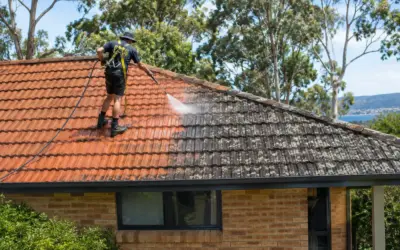
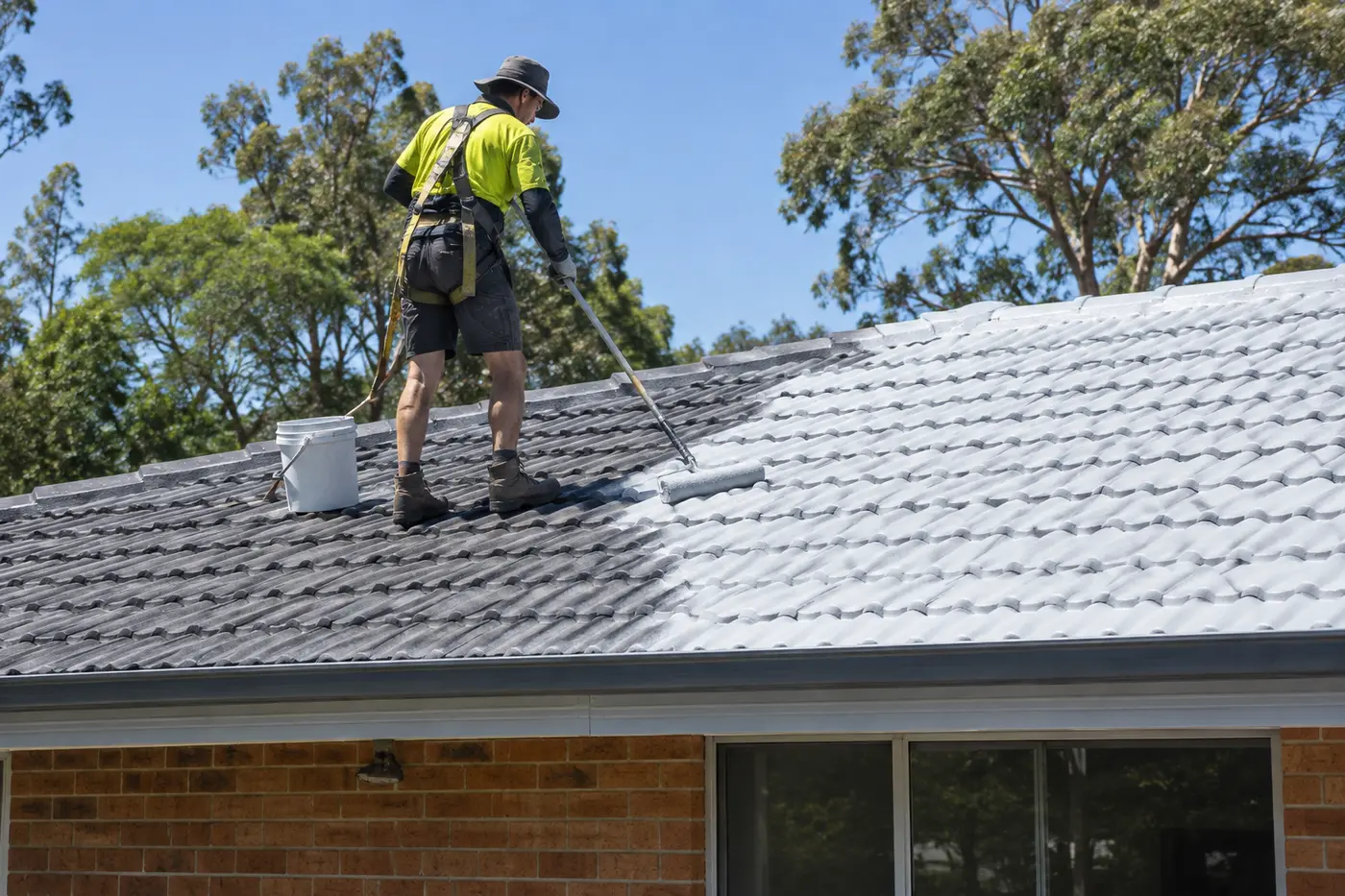
It’s late January in West Nowra. The back bedroom sits under a charcoal tile roof, and at nine at night it’s still warm in there with the fan going flat out. That’s usually when someone asks us about heat reflective roof paint, and whether a new coat of it would fix the problem. Sometimes it helps a lot. Sometimes the money is better spent somewhere else. Which one you get depends on your roof, what’s under it, and whether the roof needs painting anyway.
Reflective paint bounces back heat you can’t see
A roof heats up because it soaks up sunlight. A big part of the sun’s energy is infrared, which you feel as heat but can’t see. Ordinary dark pigments soak up most of it. Heat reflective coatings use pigments chosen to bounce more of that infrared back off the roof, so a mid grey in a reflective paint runs cooler than the same mid grey in a standard paint.
The colour still matters more than anything else. A pale roof in ordinary paint will usually stay cooler than a dark roof in the best reflective coating on the shelf. What the reflective pigments do is give you some of that benefit in a darker colour, which matters if you want the house to keep its look or you’re in an estate with colour rules.
If you’re comparing products, ignore the marketing photos and ask for the technical data sheet. Look for the solar reflectance figure (some makers list TSR, total solar reflectance, or SRI, solar reflectance index). Compare the same colour across brands, because a brand’s white and its charcoal will be miles apart.
A cooler roof doesn’t always mean a cooler room
This one surprises people. The paint cools the roof surface, but what you feel inside is the heat that makes it through the roof space and the ceiling. If the ceiling has good, thick insulation sitting where it should, a lot of that heat never reaches the room anyway, and the difference you notice from the paint is smaller.
In older homes where the batts have slumped, been pushed aside by tradespeople, or were never put in at all, the roof temperature shows up in the rooms far more. That’s where a reflective coating earns its keep. It’s also worth knowing what sits under the tiles or sheets. Our post on whether your home needs roof sarking explains how that foil layer cuts radiant heat from above.
Where we see it make a real difference
Most of the homes where reflective paint is a clear win have a few things in common:
- dark tile roofs on homes with thin or patchy ceiling insulation
- metal roofs over rooms with a shallow roof space, like skillion extensions, sunrooms and converted garages
- bedrooms on the west side that cop the afternoon sun
- inland suburbs such as Cambewarra Village and Falls Creek, which miss out on the sea breeze that Culburra Beach and Shoalhaven Heads get
Sheds and granny flats with bare metal roofs are another good fit. There’s often nothing between the sheet and the room except a thin ceiling, so anything that keeps the sheet cooler is felt straight away.
Where you can probably save the money
If your roof is newer Colorbond, it already has solar reflectance built into the factory finish (BlueScope calls it Thermatech). Painting a sound Colorbond roof just to make it cooler rarely makes sense, and painting over a factory finish has its own catches. We go through those in our piece on painting a Colorbond roof.
The same goes for a roof that’s already a light colour, over a ceiling that’s well insulated. The gain from switching to a reflective version of a pale colour is small. And if the roof is in good shape and doesn’t need painting for its own sake, putting money into ceiling insulation will usually do more for comfort than a coating will.
There’s a small winter trade-off too. A roof that stays cooler in January also collects a bit less free warmth in July. In our mild coastal winters it’s rarely a dealbreaker, but it’s worth knowing.
The prep decides whether any coating lasts
A reflective topcoat is still paint. It goes on last, and it can only be as good as the surface underneath it. On a tile roof the order looks like this: pressure clean to strip off lichen, moss, salt film and old flaking paint; replace cracked or broken tiles; repoint the ridge capping where the old pointing has cracked; apply a primer or sealer coat; then two topcoats. On metal, rust spots are treated and loose or rusted screws replaced before any primer goes on.
Skip a step and the coating fails early, whether it was the premium reflective one or not. Paint also won’t stop a leak. If water is getting in through a cracked tile, a gap in the ridge capping or a tired valley, that gets fixed first. Our tile and metal roof painting service starts with a proper look at the roof for exactly that reason, so you know what it needs before anyone talks about colours.
A dirty reflective roof stops reflecting
Grime is the quiet enemy of a reflective coating. Dust, salt from the sea air, leaf litter and the lichen that loves our damp, shaded roofs all build up a dull film that soaks up heat again. Light colours also show that dirt more than dark ones, which some owners don’t expect until a year or two in.
A gentle wash every so often keeps it working. Keep overhanging branches trimmed back, clear the gutters so water doesn’t sit along the bottom rows of tiles, and have a look up there after big storms. None of this is hard. It’s simply the difference between a roof that keeps doing its job and one that looks tired well before its time.
Three questions that settle whether it’s worth it
First, does the roof need painting anyway? If the tiles are faded, porous or covered in lichen and you’re restoring it regardless, choosing a reflective topcoat is a modest upgrade on a job you were already paying for. That’s when it makes the most sense.
Second, what’s in the ceiling? Pop your head up through the manhole with a torch. If you can see the ceiling boards between thin or missing batts, sort that out too, or sort it out first.
Third, how dark is the roof and which rooms sit under it? A charcoal roof over the bedrooms is a very different case from a light grey roof over a garage. Reflective paint usually costs more per litre than standard roof paint, so be honest with yourself about where you’ll actually feel it.
Straight answers on reflective roof coatings
Is painting roof tiles a good idea?
On concrete tiles, yes, when they’re faded or porous and the roof is otherwise sound. Paint protects the surface and can make the roof cooler if you pick a reflective coating. Glazed terracotta is a different story because paint doesn’t grip the glaze well, so those roofs are usually cleaned and repaired rather than painted.
What are the disadvantages of roof coatings?
They cost more than leaving a sound roof alone, they need proper prep to last, and they don’t fix leaks or broken tiles. Light reflective colours show dirt sooner, and a cooler roof gives you a little less warmth in winter.
Do spray-on roof coatings work?
Spraying is just how the paint is applied, and it’s the normal method for roof coatings. Whether it works comes down to the cleaning, repairs and primer done first. Be wary of any pitch that promises a coating will seal every leak or replace repairs.
What is the best reflective roof paint?
There’s no single best product for every roof. Ask for the data sheet, compare the solar reflectance figure for the exact colour you want, and check the primer and topcoat are made for your roof material, whether that’s concrete tile, terracotta or metal.
What is the longest lasting roof coating?
Surface prep matters more than the brand. A good quality coating over a properly cleaned, repaired and primed roof will far outlast a premium one rolled over lichen and loose paint. Keeping the roof clean afterwards adds to its life as well.
Can you put heat reflective paint on a Colorbond roof?
You can, but newer Colorbond already has solar reflectance built into its factory finish. It’s usually only worth painting when the original finish has worn or chalked badly, and then the colour you pick will matter more than the label on the tin.
If you’re wondering whether a reflective coating would make a difference on your place, we’re happy to come and look. Roof Restoration Nowra is led by Ryan Bruce, with more than 10 years of roofing experience behind the work, and we’re fully licensed and insured. We’ll check the roof and the roof space, tell you honestly whether reflective paint is worth it, and give you a free written quote for repainting your roof if it is.