The storm comes through late in the afternoon. Ten minutes of hail drums on the roof, the lawn turns white, and then it’s gone. The ceiling looks fine. Nothing is dripping. So is the roof fine too?
Maybe. But hail damage on a roof often doesn’t show on the day. A cracked tile can sit quietly until the next proper downpour, and by then you may not connect the wet patch on the ceiling with a storm from three weeks earlier. That gap is where most of the trouble starts, and it’s also where insurance claims get harder.
Here’s what we look for after hail on Nowra and Shoalhaven roofs, what you can safely check yourself, and what needs someone up there with the right gear.
Most of the damage is out of sight from the yard
From the ground you see the roof at a shallow angle. Hairline cracks, chipped tile edges and small dents in metal sheeting are almost invisible from there. A missing tile or a hole you can see through is the exception, not the rule.
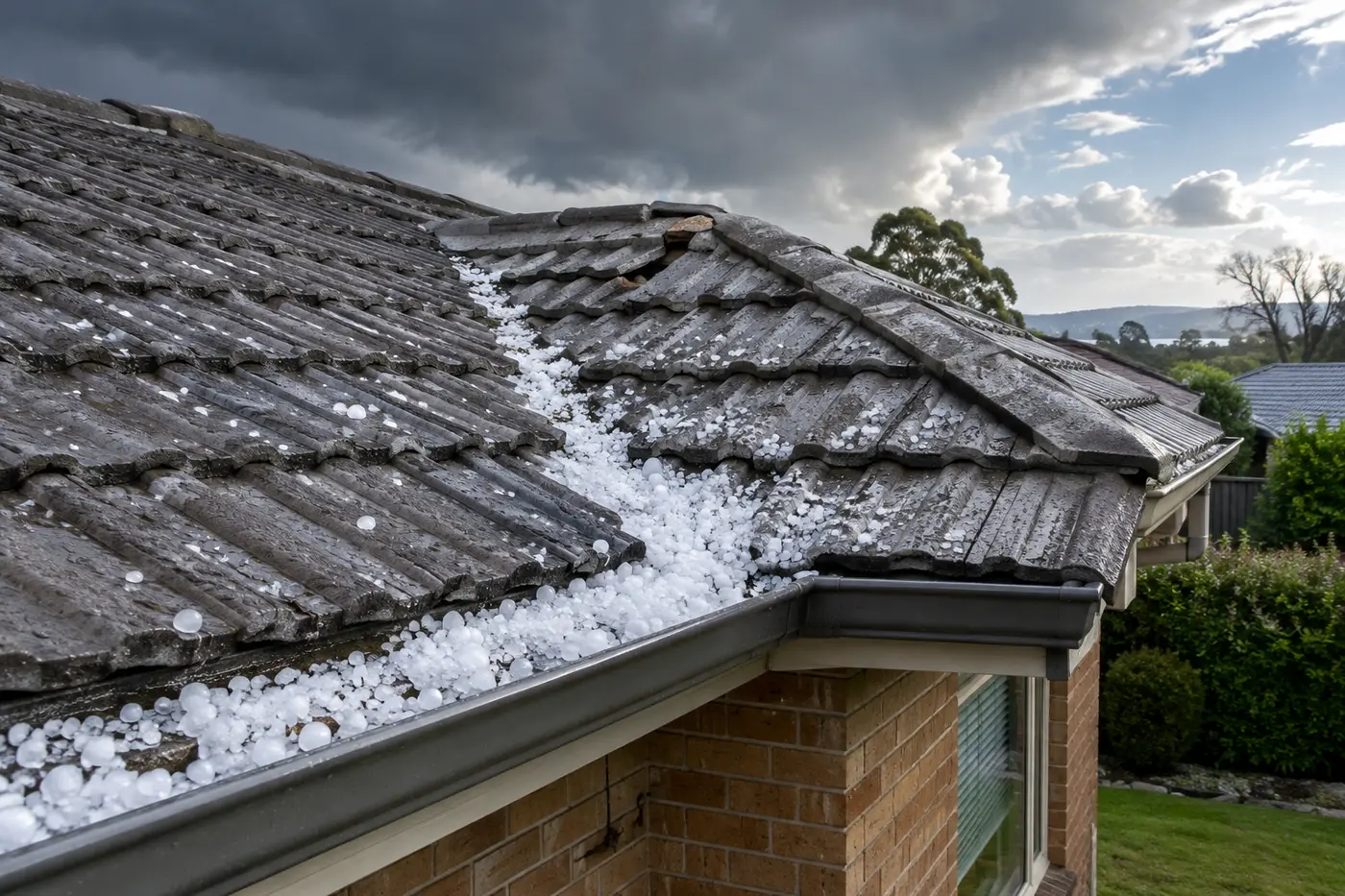
The other thing people don’t expect: hail doesn’t only cause damage when it hits. It piles up. Hailstones collect in valleys and gutters, pack down like ice, and block the path the water needs to take off the roof. Rain that falls behind that blockage has nowhere to go, so it backs up under tiles or flashings and into the ceiling space. We often find homes that leaked during a hail storm without a single broken tile. The water came in over the top of a choked valley.
What hail does to a tile roof
Concrete and terracotta tiles behave differently under impact. Concrete tiles tend to crack or have chunks knocked out of the edges. Terracotta is harder but more brittle, so a solid hit can split a tile right through. Either way, the crack might be on a tile that’s partly covered by the one above it, which means you can’t see it even from a ladder at the gutter line.
The spots we check first on a tile roof:
- Ridge caps along the top, which take the most direct hits
- Pointing (the flexible mortar strip that holds ridge caps in place) for chips and gaps
- Tiles around valleys, where hail collects and sits
- Any tiles that were already weathered or patched before the storm
Older tiles break more easily than new ones. If your roof has been up for a few decades and has moss, lichen or a worn surface, expect more cracking from the same storm than a newer roof down the street. Our guide to why roof tiles crack and when it matters goes into how we decide between swapping a few tiles and doing more.
Dents in a metal roof are not always leaks
Colorbond and Zincalume roofs usually come through hail without holes. What you get instead is denting, sometimes a lot of it. The question we get asked most is whether a dented metal roof still keeps water out.
Usually it does, at least for now. A dent on its own doesn’t let water in. What we look at is the coating. If the dent is sharp enough to crack the paint or the protective metal coating underneath, that spot can start to rust over time, especially close to the coast where salt air speeds things up. A crease along a rib or near a screw is more of a worry than a soft dimple in the middle of a pan.
Hail is also hard on the bits around a metal roof that aren’t steel sheeting:
- Polycarbonate skylights and roof sheets, which crack or punch through
- Whirlybirds and vents, which dent and then wobble or seize
- Gutters, which dent and lose their fall so water pools
- Flashings that get bent away from the wall or roof they’re meant to seal against
What you can safely check yourself
Please don’t climb onto the roof. Wet tiles are slippery, cracked tiles break further under your weight, and metal sheeting is slick after rain. Everything below can be done from the ground or inside the house.
Walk around the house and look along the gutter line for broken tile pieces, bits of ridge cap or lumps of mortar on the ground or in the gutters. Look up at skylights and vents for anything cracked or bent. If you have binoculars, use them on the ridge line.
Inside, check ceilings and the tops of walls for new stains, bubbling paint or a musty smell. If you can safely get into the ceiling space, a torch will show you damp insulation, water marks on timber, or daylight where there shouldn’t be any. Our post on reading a water stain on the ceiling explains how to tell a fresh roof leak from an old mark.
Then take photos. Lots of them, with the date showing if your phone records it. Photograph the hail on the ground, any debris, the gutters, and every mark inside. If you find a broken piece of tile, keep it.
The next rain tells you the most
A roof that looked fine after the hail can start leaking with the next heavy downpour, when water finally finds the hairline crack. That’s why we suggest getting the roof looked at before the next storm rather than waiting to see what happens. Spring and summer storms in the Shoalhaven can come through one after another, and a small crack is a lot cheaper to fix than a soaked ceiling.
When we come out after hail, we get up on the roof, check tiles or sheeting section by section, clear any hail or debris that’s still sitting in valleys and gutters, and photograph what we find. You get it explained in plain English and a written quote for the work. If the damage is a handful of cracked tiles, we’ll tell you that. Not every storm means a big job. Our tile and metal roof repair service covers everything from single tiles and ridge capping through to replacing damaged sheets and flashings.
Insurance usually wants proof, not guesses
Many home insurance policies cover sudden storm and hail damage, but the details vary a lot. Some treat dents that don’t let water in as cosmetic. Most ask you to show the damage came from a specific event, not from the roof wearing out. That’s where the photos and a dated, written report from a roofer help.
Call your insurer early, before major repairs, and ask what they need from you. If water is coming in, they’ll generally expect you to take reasonable steps to stop it getting worse, such as a temporary cover. We’ve written more about what insurers look at with roof leak claims, including the wear and tear question.
Get the roof checked before the next storm
If hail has come through your street, it’s worth a proper look even if nothing is dripping yet. Roof Restoration Nowra is led by Ryan Bruce, with more than 10 years of roofing experience behind the work, and we’re fully licensed and insured. We work on tile and metal roofs across Nowra and the surrounding areas. Get in touch through our roof repairs page and we’ll come out, tell you what the hail actually did, and give you a free written quote.
Common questions about hail damage on roofs
How do I tell if I have hail damage on my roof?
Start from the ground: look for broken tile pieces or mortar in the gutters and garden, cracked skylights and dented vents. Inside, check ceilings for fresh stains and the roof space for damp insulation. Hairline cracks and coating damage usually need someone on the roof to find them.
Can hail dents be popped out of a metal roof?
Not in any practical way. Roof sheeting isn’t like a car panel, and trying to push dents out from underneath can crack the coating further. If a dent has damaged the coating or the sheet’s shape stops water draining properly, the usual fix is to replace that sheet.
Is a dented Colorbond roof still waterproof?
In most cases, yes. A dent doesn’t make a hole. The risk is longer term: if the dent cracked the paint or metal coating, that spot can rust, so it’s worth having a roofer check the worst areas closely.
How soon after a hail storm should I get my roof inspected?
Ideally before the next heavy rain. Cracks that let nothing in on the day can leak when the next downpour arrives, and an inspection close to the storm date also makes it easier to link the damage to that event for insurance.
Does home insurance cover hail damage to a roof?
Many policies cover sudden storm and hail damage, but some exclude cosmetic dents and most exclude wear and tear. Check your policy wording, take dated photos, and contact your insurer before major repairs are done.
Should I get on the roof to check for hail damage?
No. Wet or hail covered tiles are slippery, damaged tiles can break under your feet, and a fall from a roof can be life changing. Check from the ground and the ceiling space, and leave the roof itself to someone with proper safety gear.